
High-Priority Modular Configurations for Panama
Engineered for structural resilience, tropical heat insulation, and rapid sea-freight deployment directly to Balboa, Colón, and Manzanillo ports.
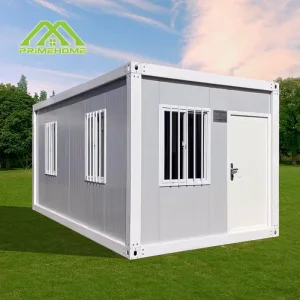
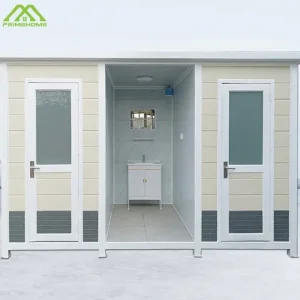
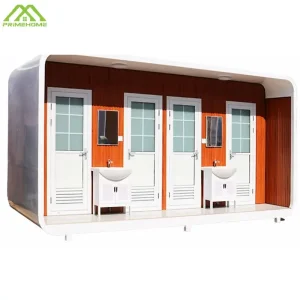
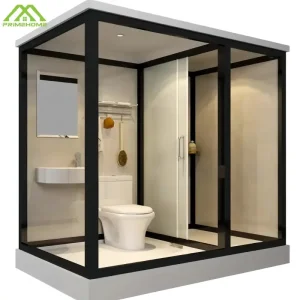
Panama Market Analysis: The Shift Toward Prefabricated & Modular Structures
Panama serves as the undisputed logistical and commercial crossroad of the Americas. Driven by mega-infrastructure expansions surrounding the Panama Canal, ongoing logistics corridor development in the Colón Free Trade Zone (ZOLICOL), Tocumen International Airport logistics hubs, and explosive growth in coastal luxury eco-tourism (Bocas del Toro, Chiriquí, Pearl Islands, and Riviera Pacífica), the demand for rapid, flexible building solutions has surged dramatically.
Traditional reinforced masonry and concrete construction in Panama faces significant systemic bottlenecks: prolonged permitting timelines, escalating labor overhead, seasonal tropical downpours (the wet season spanning 8–9 months per year), and high freight costs for inland raw materials. Forward-thinking procurement managers, civil engineering contractors, and hospitality developers across Panama City, David, and Colón are transitioning to high-performance modular container housing systems to achieve rapid project delivery and fixed structural costs.
Speed of Deployment
Complete off-site fabrication allows foundations and structural module assembly to proceed simultaneously. Standard 20ft and 40ft units are deployed and operational within days of port arrival.
Tropical Climate Resilience
Custom-engineered with hot-dip galvanized steel framing, high-density Polyurethane (PU) insulation, and multi-layer fluorocarbon anti-corrosion exterior coatings to withstand high ambient humidity and salt spray.
Plug-and-Play Utilities
Fully integrated mechanical, electrical, and plumbing (MEP) systems factory-tested to international ISO and UL standards, ready for immediate connection to Panama municipal grids or off-grid solar generators.
Container Toilet Infrastructure: Critical Commercial & Industrial Demand in Panama
Sanitation infrastructure remains a major challenge across rapidly expanding industrial zones, port expansion projects, remote ecotourism resorts, and public civic developments in Panama. High water tables, coastal ecological regulations (such as MiAmbiente compliance), and remote terrain make traditional subterranean septic installation unfeasible or prohibitively expensive.
1. Commercial & Public Urban Applications
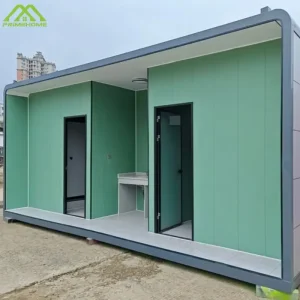
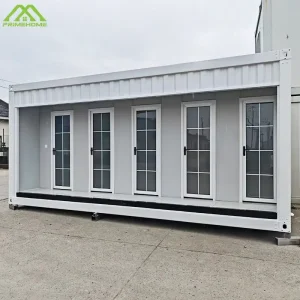
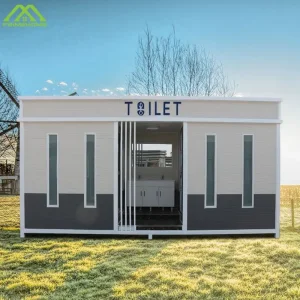
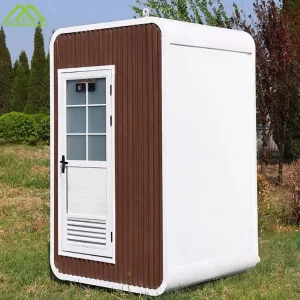
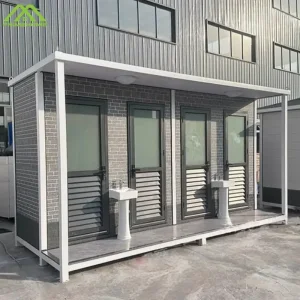
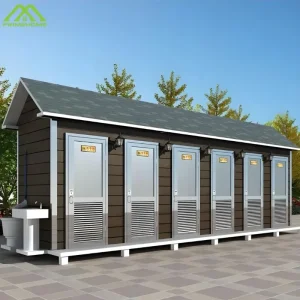
Panama City’s vibrant event sector, outdoor commercial markets, municipal parks, and beachfront promenades in Amador and Cinta Costera require durable, hygienic, and aesthetically refined public restrooms. Single and double-room modular container toilets provide fully climate-controlled, easy-to-sanitize sanitary facilities equipped with sensor-activated fixtures, heavy-duty anti-slip aluminum checker plate flooring, and internal ventilation units engineered for continuous high-footfall usage.
2. Industrial, Mining & Logistics Operations
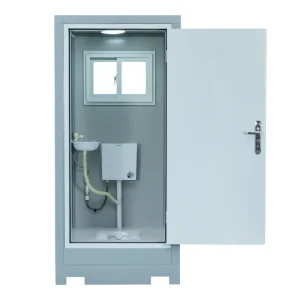
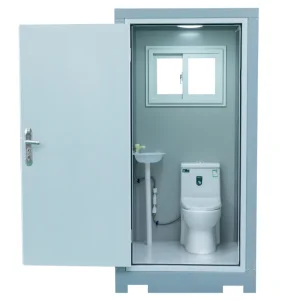
In major logistics centers around Colón, Manzanillo International Terminal (MIT), and inland infrastructure projects along the Pan-American Highway, worker welfare standards mandate durable, heavy-duty sanitation. Modular container toilets equipped with integrated blackwater holdings tanks, integrated macerator pumps, and self-contained water delivery systems allow immediate operation without underground sewage hookups, enabling easy relocation as project site phases advance.
| Sanitary Container Specification | Standard Commercial Configuration | Heavy-Duty Industrial / Public Event Standard |
|---|---|---|
| Structural Frame | 2.5mm Hot-Dip Galvanized Cold-Formed Steel | 3.0mm Structural Galvanized Steel with C5-M Anti-Corrosion Marine Paint |
| Wall & Ceiling Panels | 50mm EPS / Rockwool Fireproof Sandwich Panels | 75mm High-Density Polyurethane (PU) Closed-Cell Insulation Panels |
| Flooring System | 18mm Fiber Cement Board + 2.0mm Waterproof PVC Sheet | 18mm Marine Plywood + 3.0mm Patterned Aluminum Anti-Slip Plate |
| Internal Plumbing | PEX / PVC Pipes (P-trap isolation, CE Certified) | 316 Stainless Steel Exposed Pipes / Heavy-Duty Commercial Sanitary Ware |
| Waste Management Option | Direct Municipal Sewer Connection Ready | Built-in Wastewater Holding Tank with High-Head Macerator Pump System |
Global vs. Panama Localized Prefabricated Landscape
Data-driven comparison of construction timelines, procurement overhead, and lifecycle performance.
The Chinese Manufacturing Efficiency Advantage for Panama Importers
Why do major Panamanian developers and public contractors source modular container homes and sanitary units directly from established Chinese source factories in industrial hubs like Suzhou? The competitive advantage relies on three fundamental industrial pillars:
1. Unmatched Industrial Cluster Supply Chain
Our manufacturing facility in Suzhou operates within the world’s densest steel fabrication and prefabricated component cluster. Raw steel procurement, hot-dip galvanizing, sandwich panel formulation, aluminum window manufacturing, and sanitary fixture production occur within a 50-kilometer radius. This localized supply chain integration drastically reduces raw material lead times and enables unmatched economies of scale.
2. Stringent Quality Assurance & International Certifications
Every modular unit destined for Panama undergoes multi-stage technical inspection: structural load verification, high-pressure water seal test (simulating tropical torrential rain), electrical isolation checks, and paint thickness testing. Our production processes adhere strictly to ISO9001, ISO14001, CE structural standards, and ASTM structural steel specifications.
3. Optimized Direct Sea Freight to Panama Logistics Hubs
Direct container shipping routes from Shanghai/Ningbo ports to Panama’s major maritime hubs—such as Port of Balboa (Pacific side) and Port of Cristobal / Manzanillo (Atlantic side)—offer reliable transit times averaging 24 to 30 days. By flat-packing detachable and expandable units, we maximize standard 40ft High Cube (40HQ) ocean shipping capacity, fitting up to 4 to 8 standard container house units per shipping container, drastically lowering freight cost per square meter.
Localized Application Blueprints across Panama Proving Grounds
Modular container architecture offers versatile structural adaptability tailored to Panama’s unique geography, microclimates, and economic zones:
Eco-Tourism & Glamping
Locations: Bocas del Toro, Boquete, Santa Catalina, Isla Taboga.
Luxurious expandable units and modern Apple Cabins featuring floor-to-ceiling double-glazed panoramic glass wall units. Light structural footprint protects delicate tropical soils while providing high-end rental yield.
Canal & Mining Camps
Locations: Donoso, Colón, Chagres River Logistics Corridors.
Multi-unit stackable worker dormitories, engineering site offices, and heavy-duty sanitary container blocks designed to withstand continuous 24/7 industrial use under extreme humidity.
Urban Commercial Hubs
Locations: Panama City (Costa del Este, Via España, Amador).
Pop-up retail spaces, modular coffee shops, and modern public sanitation facilities integrated seamlessly into urban infrastructure with minimal site disturbance.
Procurement Roadmap & Total Cost of Ownership (TCO) Analysis
Evaluating the true ROI of importing modular container houses versus traditional construction requires examining the complete Total Cost of Ownership over a 20-year structural lifespan:
| Cost Component | Traditional Masonry in Panama | Suzhou Factory Prefab Container House |
|---|---|---|
| Site Preparation & Foundation | Heavy concrete slab & deep piling ($$$$) | Light point piers or simple concrete strip ($) |
| Construction Labor Overhead | High local specialized labor cost over months ($$$) | Off-site automated build; 2-4 workers stack in days ($) |
| Weather Delay Financial Risk | Severe (8-month rain season causes site halts) ($$$) | Zero weather risk during factory production phase ($0) |
| Relocation & Residual Value | Zero (Permanent immovable structure) | 100% Mobile & Demountable; high resale value ($$$) |
Frequently Asked Questions: Importing Modular Houses to Panama
Technical and logistical insights for procurement managers, civil engineers, and project developers.
How do your modular container houses withstand Panama’s high humidity and heavy rainfall?
What is the expected shipping timeline from your Suzhou factory to Panama ports?
Are your container toilet units compliant with Panama environmental & plumbing codes?
How are the modular container houses packaged to minimize sea freight costs?
Can the structural layout, electrical voltage, and interior finishes be customized?
Explore Expanded Modular Container Solutions for Panama
Factory-direct modular sanitation, portable office accommodation, and customizable living pods ready for immediate export order.
Accelerate Your Panama Modular Construction Project
Partner directly with China's leading 28,000 m² modular container manufacturer. Get factory-direct pricing, customized CAD drawings, and complete export shipping support to Panama ports.