
High-Quality Modular Container House Manufacturers & Factory in Kuwait
Precision-engineered, heavy-duty modular container solutions custom-built for Kuwait's extreme thermal environments, mega infrastructure initiatives, and oil & gas camp developments.
Premier Modular Container Solutions for Kuwait
Engineered for immediate deployment across Kuwait City, Al Ahmadi, Shuaiba Industrial Area, and remote desert job sites.
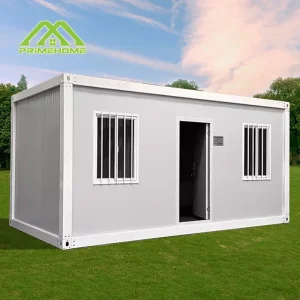
Custom Flat Pack Container House - Fast Assembly Modular Housing for Kuwait Projects
View Specifications & Inquiry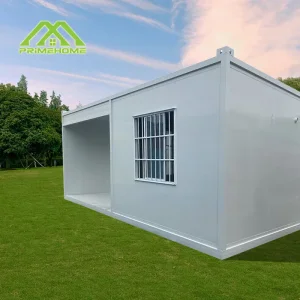
Custom Modular 20ft/40ft Expandable Container House for Kuwait Site Operations
View Specifications & Inquiry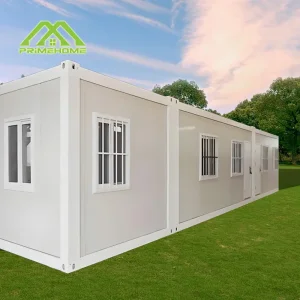
High-Quality 40ft Luxury Modular Container House (3-Bedroom Layout for Desert Living)
View Specifications & Inquiry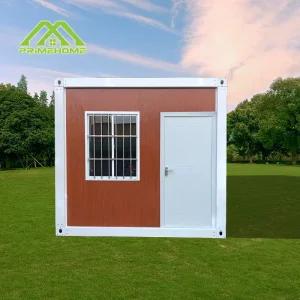
China Affordable 40ft Expandable Modular Container Homes for Rapid Camp Expansion
View Specifications & Inquiry1. Executive Overview: Modular Construction Dynamics in Kuwait
The State of Kuwait represents one of the most demanding yet commercially lucrative environments for prefabricated structural engineering and offsite modular architecture. Driven by the ambitious roadmap of Kuwait Vision 2035 ("New Kuwait"), the nation is undergoing an unprecedented structural expansion across infrastructure, commercial ports, residential cities, and energy sector modernizations. Key developments such as Madinat Al-Hareer (Silk City), the expansion of Mubarak Al-Kabeer Port, and massive ongoing field developments by the Kuwait Oil Company (KOC) and Kuwait National Petroleum Company (KNPC) demand continuous, highly resilient civil accommodation infrastructure.
Traditional concrete and masonry construction in the Arabian Gulf region faces formidable headwinds: severe labor shortages, high material logistics overheads, extended procurement cycles, and vulnerability to extreme weather delays. Consequently, global enterprise contractors, ministry procurement boards, and commercial developers in Kuwait are rapidly transitioning toward advanced modular container housing systems manufactured offsite in specialized industrial centers like Suzhou, China, and shipped directly to Shuwaikh or Shuaiba ports for plug-and-play assembly.
Information Gain Insight: Modular container houses deployed in Kuwait must satisfy a dual paradox: delivering structural mobility for temporary oilfield relocations while offering the structural integrity, thermal resistance, and airtight sealing of permanent civil infrastructure capable of enduring 50°C+ summer peaks.
2. Thermal Physics, Salinity Resistance & Kuwait Code Compliance
Deploying modular container structures in Kuwait requires rigorous engineering adjustments to overcome three core environmental threats: extreme solar thermal loads, fine sand particle ingress (Shamal winds), and hyper-saline coastal atmospheric corrosion along the Arabian Gulf coastline.
A. Thermal Envelope & Insulation Engineering
Ambient air temperatures in areas such as Mutriba and Mitribah routinely reach up to 53°C to 55°C during summer, with direct radiant steel surface temperatures exceeding 75°C. Standard expanded polystyrene (EPS) panels suffer thermal degradation under such stress. Our Kuwait-spec modular units utilize high-density Polyisocyanurate (PIR) or Structural Polyurethane (PU) core sandwich panels with thermal break frame integration:
- PIR / Structural PU Insulation Core: Density of 42 kg/m³ with closed-cell structure providing superior thermal conductivity ($\lambda \le 0.020 \text{ W/m}\cdot\text{K}$).
- Reflective Solar PVDF Coating: Outer steel wall skins feature Fluoropolymer (PVDF) 3-coat paint finishes with high Solar Reflectance Index (SRI $\ge 82$), deflecting up to 85% of infrared radiation.
- Thermal Bridging Elimination: Custom structural rubber gaskets isolate inner living quarters from outer steel framing, preventing heat conduction into internal spaces.
B. Kuwait Fire Force (KFD) & MEW Code Alignment
All structural components, electrical harnesses, and plumbing networks imported into Kuwait must strictly comply with local government mandates:
| Regulatory Dimension | Kuwait Standard / Requirement | China Factory Technical Solution |
|---|---|---|
| Fire Safety Standard | Kuwait Fire Force (KFD) Non-Combustible Mandate | Class A Fire-rated Mineral Rockwool / PIR panels; flame spread index < 25; self-extinguishing inner cores. |
| Electrical System | MEW Specifications (240V / 415V, 50Hz) | Full copper wiring enclosed in metallic conduit, BS 1363 UK-style standard sockets, Schneider / ABB RCBO protection breakers. |
| Sandstorm Sealing | IP65 Dust & Moisture Ingress Protection | Double-EPR EPDM compression seals on all structural joints, doors, and double-glazed tempered low-E windows. |
| Wind & Seismic Load | KOC Desert Infrastructure Code | Heavy Q355B galvanized steel framework built to withstand sustained desert winds up to 150 km/h (0.75 kN/m²). |
3. China Manufacturing Superiority: Suzhou Factory Supply Chain
The synergy between Chinese manufacturing excellence and Kuwait procurement requirements provides unmatched commercial advantages. Operating out of our 28,000 m² automated manufacturing facility in Suzhou, China, our factory integrates modern robotic fabrication with rigorous quality assurance protocols to deliver over 5,000 modular units monthly.
Scale & Cost Efficiency
Direct sourcing of hot-dip galvanized steel coil (minimum 275g/m² zinc coating) and mass factory pre-assembly cuts total unit cost by 35-45% compared to local Middle East fabrication.
Turnkey Pre-Integration
Units are fully equipped with integrated plumbing networks, pre-wired lighting trunks, sanitary hardware, and ceiling systems before export container loading.
Maritime Freight Optimization
Flat-pack modular container designs allow up to 4 complete standard units to be bundled and shipped as a single 20ft SOC (Shipper Owned Container), slashing ocean freight rates to Kuwait.
Our export logistics department coordinates directly with shipping lines servicing direct routes from Shanghai/Ningbo ports to Kuwait's Shuwaikh Port and Shuaiba Commercial Port, ensuring streamlined customs documentation (Certificate of Origin, SASO/KUCAS compliance, and BILL of Lading acceleration).
4. Enterprise TCO & CAPEX vs OPEX Financial Modeling
For EPC contractors, oil exploration enterprises, and municipal ministries operating in Kuwait, procurement decision-making centers around Total Cost of Ownership (TCO) and asset flexibility. Modular steel container houses alter project financial dynamics by converting high risk, non-recoverable civil construction expenditure into reusable, relocatable capital assets.
Conventional Concrete Construction
- High initial CAPEX with 12-18 month lead time
- Civil structures become sunk costs post-project
- Susceptible to local labor wage spikes & material inflation
- Significant site debris and environmental footprint
- High HVAC energy consumption due to thermal mass
China Modular Container Solution
- Low CAPEX; delivery and occupancy within 30-45 days
- 100% demountable; zero asset loss upon site relocation
- Predictable factory fixed-cost pricing structure
- Low-carbon footprint with recyclable steel frames
- Optimized thermal envelope cuts summer cooling costs by up to 40%
5. Next-Gen Trends: Smart Pods & Off-Grid Solar Modular Units
The Middle East modular building sector is undergoing rapid technological convergence. As Kuwait intensifies its commitment to renewable energy integration under Vision 2035, containerized buildings are evolving from simple shelters into high-tech, self-sustaining habitats.
Solar Micro-Grid Integration
Roof-mounted photovoltaic panel mounts combined with lithium battery storage packs enable off-grid container accommodation in remote desert exploration sectors where utility connections are absent.
Smart IoT Climate Automation
Integrated smart thermostats, occupancy sensors, and automated exterior window shutters optimize cooling efficiency, reducing peak electrical load during high-demand afternoon hours.
Luxury Glamping & Eco-Resorts
Custom Apple Cabins and panoramic Space Capsules are rapidly expanding Kuwait’s eco-tourism sector in locations like Failaka Island and desert retreats in Al Abdali.
6. Localized Application Scenarios Across Kuwait
A. Oil & Gas Upstream Rig Accommodation
Heavy-duty detachable and expandable container units configured as rig camps, mess halls, engineering offices, and blast-resistant site command centers for Kuwait Oil Company (KOC) field operations in Burgan, Ratqa, and Sabriya fields.
B. Infrastructure & Mega-Bridge Work Camps
High-density, multi-story stackable flat-pack container worker dormitories designed for fast erection along major highway corridors, port expansions, and the Silk City development zone.
C. Coastal Pop-Up Commercial & Retail Hubs
Custom painted luxury modular pods utilized for beachside cafes, boutique retail kiosks, and temporary event venues along Arabian Gulf Street in Kuwait City and Salmiya.
D. Emergency Civic & Medical Facilities
Rapidly deployable sanitary container units, mobile isolation triage clinics, and municipal security posts for national defense and civil protection services.
Frequently Asked Questions (FAQ) for Kuwait Importers
Technical, regulatory, and logistics answers for engineering teams and procurement directors.
How do your container houses withstand Kuwait's 50°C+ summer heat?
Our Kuwait-bound container houses are built with a specialized thermal insulation package. We utilize high-density Polyisocyanurate (PIR) or Rockwool cores with a minimum thickness of 75mm to 100mm, coupled with thermal break profiles. The exterior steel skin is coated with reflective PVDF paint (SRI > 80), and windows feature argon-filled double tempered low-E glass to block infrared and UV heat gain effectively.
What electrical standards are installed for Kuwait compatibility?
We factory-install electrical systems strictly adhering to Kuwait’s Ministry of Electricity and Water (MEW) standards: 240V single-phase / 415V three-phase, 50Hz frequency, with UK BS1363 standard 3-pin sockets and high-grade copper conductors housed in flame-retardant conduit channels.
What is the ocean shipping lead time from China to Shuwaikh or Shuaiba Port?
Typical maritime ocean transit from Shanghai or Ningbo port directly to Shuwaikh or Shuaiba Port in Kuwait takes approximately 18 to 22 days. Factory production lead time varies between 10 to 25 days depending on project order volume, allowing total door-to-port delivery within roughly 30 to 45 days.
Can these modular containers be stacked for multi-story camp accommodation?
Yes. Our structural steel framing utilizes cold-formed Q355B galvanized steel profiles with heavy-duty corner castings, allowing modular container units to be safely stacked up to 3 stories high without external structural steel bracing.
Do you provide custom floor plans for KOC oilfield camp requirements?
Absolutely. Our in-house engineering team works directly with client CAD/BIM drawings to customize room partitions, executive ensuite bathrooms, commercial kitchens, office layouts, and laundry facilities tailored precisely to contract specifications.
What type of foundation preparation is required in desert locations?
Container houses require minimal site foundation. Simple concrete strip footings, concrete corner pads, or compacted gravel beds with steel leveling plates are sufficient, avoiding expensive full slab concrete pours and facilitating rapid site restoration upon project completion.
Explore Complete Container House Series for Kuwait Procurement
Factory-direct pricing, certified quality standards, and full customization available across all models.
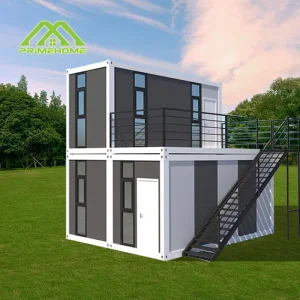
Wholesale High-Quality 10ft/20ft Garden Modular Office & Home Units for Kuwait
View Specifications & Inquiry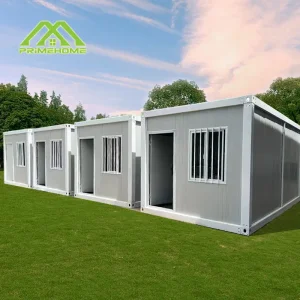
20ft/40ft Galvanized Steel Dismantlable Modular Mobile Homes for Kuwait Camps
View Specifications & Inquiry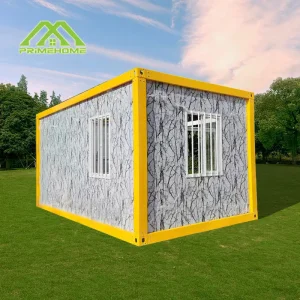
Ready-to-Ship 4/5 Bedroom Prefabricated Modular Container Houses for Multi-Family Living
View Specifications & Inquiry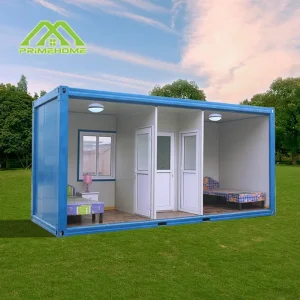
Wholesale 40ft Luxury Removable Steel Container Camping Cabin for Kuwait Desert Resorts
View Specifications & Inquiry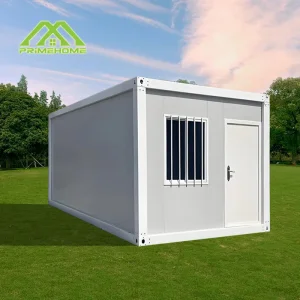
Custom Demountable Modular Mobile Homes for Outdoor Living & Kuwait Campsites
View Specifications & Inquiry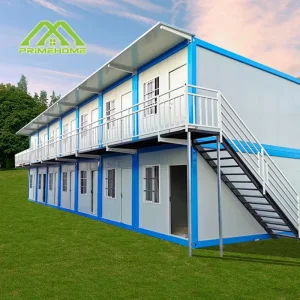
Plug-and-Play Custom 20ft/40ft Prefabricated Container Units for Practical Site Housing
View Specifications & Inquiry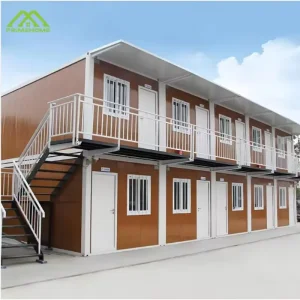
Quick-Deploy Container Accommodation, Container Hotels & Site Offices (Factory Direct)
View Specifications & Inquiry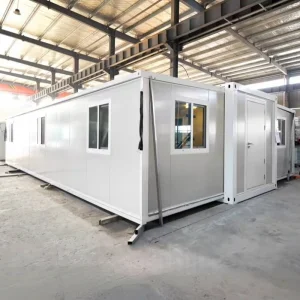
Cost-Effective 40FT 5-Bedroom Expandable Modular Staff Worker Dormitory for Kuwait
View Specifications & InquiryReady to Request a Custom Quote for Your Kuwait Project?
Contact our senior structural engineering team today to receive CAD layout proposals, technical datasheets, and direct factory pricing within 24 hours.