
Premier Modular Housing Flagships for Brazilian Projects
Engineered for rapid deployment across Latin America. Unfold high-performance living and commercial spaces with structural integrity and insulation optimized for tropical microclimates.
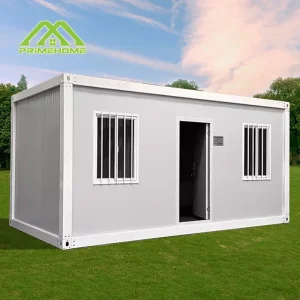
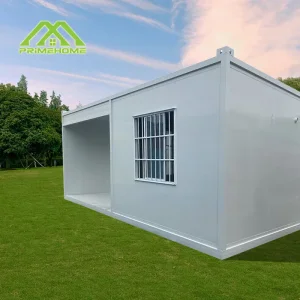
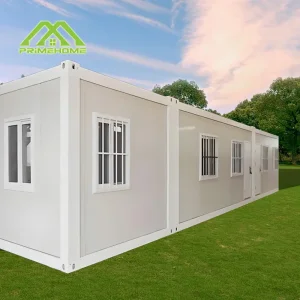
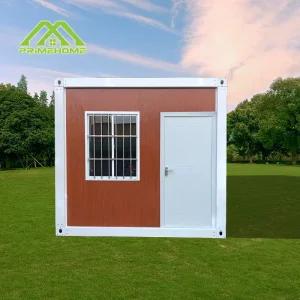
Macroeconomic & Structural Shifts in Brazil's Modular Construction Sector
The convergence of agricultural expansion, infrastructure investments, and sustainable tourism is redefining off-site prefabricated building demand across South America's largest economy.
The Imperative for Off-Site Prefabrication in Brazil
Brazil’s construction market is undergoing a seismic paradigm shift. Traditional masonry (*alvenaria*) construction—long the default building methodology—is encountering severe friction from escalating labor costs, protracted site timelines, high material wastage (often exceeding 15%), and logistical bottlenecks in remote interior regions such as Mato Grosso, Pará, and Goiás.
The booming agribusiness sector (soy, corn, cattle, sugarcane) and heavy mining operations (iron ore, bauxite, nickel) require immediate, high-durability operational bases, worker dormitories, and executive housing. Waiting 18 to 24 months for conventional brick-and-mortar builds is no longer financially viable when commodity cycles demand rapid asset deployment.
Brazil Market Dynamics at a Glance
- Agribusiness Dormitory Demand (Center-West) +28% YoY Growth
- Traditional Masonry Waste Rate 12% - 18% Loss
- Modular Container Waste Rate < 2% Loss
- Eco-Tourism Glamping CAGR (Nordeste Region) 21.4% (2024-2030)
- Average On-Site Labor Reduction 65% Faster Time-to-Market
Optimizing Modular Engineering for Brazil's Tropical Microclimates
Exporting container structures to Brazil demands targeted engineering modifications to solve severe solar radiation, high humidity, coastal salinity, and strict national performance standards.
Thermal Transmittance & Solar Control
Tropical climates in North and Central-West Brazil require thermal insulation engineered to prevent the "oven effect." We deploy Polyisocyanurate (PIR) and Rockwool core sandwich panels with high-density polyurethane (40kg/m³) that achieve low U-values (<0.35 W/m²K), dramatically slashing HVAC energy demands.
ABNT NBR 15575 & Acoustic Performance
Compliance with Brazil's standard for building performance (*Norma de Desempenho*) is critical for commercial housing permits. Our floor assemblies feature light-weight cement board combined with acoustic damping underlays, guaranteeing noise reduction index values above 45 dB between adjacent living spaces.
Corrosivity Protection (C4/C5 Marine Grade)
For coastal deployments in Salvador, Rio de Janeiro, and Fortaleza, salt spray can degrade untreated steel within 3 years. We utilize Q355B hot-dip galvanized steel frames finished with epoxy zinc-rich primers and fluorocarbon (PVDF) architectural topcoats rated for high UV and salt resistance.
Modular Engineering Comparison Matrix for Brazilian Conditions
| Engineering Parameters | Standard International Specs | PrimeHome Brazil Optimized Specs | Brazilian Buyer Value Add |
|---|---|---|---|
| Structural Framing | Light gauge Q235 steel profiles (1.8 - 2.2mm) | Heavy-Duty Q355B Galvanized Steel Frame (3.0 - 4.0mm) | Resists high wind loads up to 140 km/h and stacked structural loads up to 3 floors. |
| Wall Thermal Insulation | 50mm EPS (Expanded Polystyrene) Panel | 75mm High-Density PIR or Rockwool Panel (Fire Class A) | Complies with NBR 15575 thermal performance; reduces internal temperatures by 6-9°C. |
| Roof & Drainage Integration | Flat steel sheet with exterior gutters | Sloped integrated rainwater drainage with dual-layer insulation | Prevents pooling and leaks during extreme tropical downpours (*tempestades tropicais*). |
| Electrical System Wiring | Standard 110V single-phase internal wiring | Dual 110V/220V dual-frequency (60Hz) NBR 5410 compliant conduits | Plug-and-play compatibility with Brazilian power grids and circuit breakers. |
| Container Coating | Single coat alkyd enamel finish | Dual coat epoxy zinc primer + Polyurethane finish (120μm total thickness) | Prevents oxidation in humid Amazonian and aggressive salt-water coastal environments. |
Customized Industrial Solutions across Brazil's Key Sectors
From off-grid agricultural estates in Mato Grosso to luxury coastal glamping pods in Bahia, our modular container technology delivers targeted operational capabilities.
1. Agribusiness & Remote Mining Modular Camps
Deploying accommodation complexes in remote farm estates (*fazendas*) or mining operations requires self-contained infrastructure. We manufacture expandable and flat-pack modules integrated with commercial kitchens, laundry blocks, and dormitory suites fitted with heavy-duty air conditioning conduits.
- Compliant with NR-18 regulatory worker housing frameworks.
- Compact shipping: up to 8 units of flat-packs per 40ft HQ container.
- Solar roof kit ready to support off-grid battery storage.
2. Eco-Tourism Glamping Pods & Coastal Resorts
Brazil’s hospitality operators in Jericoacoara, Fernando de Noronha, and Trancoso seek architectural designs that harmonize with nature without heavy environmental disruption. Our Luxury Apple Cabins and Space Capsules feature panoramic floor-to-ceiling insulated glass and minimal site foundation impact.
- Zero wet-work on-site construction to protect delicate eco-systems.
- Pre-installed luxury bathroom, smart home lighting, and climate control.
- High ROI: Rapid assembly allows resorts to open months ahead of schedule.
3. Urban Commercial Infill & Pop-Up Retail
In high-density metropolises like São Paulo, Rio de Janeiro, and Curitiba, real estate developers leverage modular container units for commercial coffee shops, sales centers, and pop-up storefronts that can be easily relocated when land leases expire.
- Modular stackability up to 3 stories with glass curtain walls.
- Customizable brand cladding and LED architectural accent lights.
- Fully demountable structure for complete asset mobility.
4. Public Infrastructure & Emergency Response Units
State governments and municipal authorities require modular emergency accommodation, field hospitals, and mobile classrooms that can be transported via river barges or truck fleets into remote Amazonian municipalities.
- Rapid plug-and-play sanitary module integration (Container Toilets).
- Vandal-resistant steel construction with security window shutters.
- Interchangeable panel design for flexible room configuration.
State-of-the-Art Factory Production & Technology Roadmap
Inside Suzhou PrimeHome's 28,000 m² automated manufacturing facility, advanced robotics and rigid QA protocols drive global modular innovation.
Automated Roll-Forming
Precision CNC cold-roll forming machinery ensures exact steel beam profile tolerances within ±0.5mm, eliminating structural warping during transport and enabling multi-story stacking stability.
Robot-Assisted Welding
Automated robotic arm welding stations execute continuous, high-penetration structural welds across container corner castings, guaranteeing waterproof integrity and superior shear resistance.
Pre-Piped MEP Systems
Plumbing lines, NBR-compliant electrical conduits, and air-conditioning refrigerant sleeves are pre-integrated into wall panels before shipping, reducing on-site MEP trade costs by 80%.
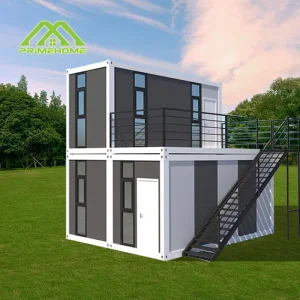
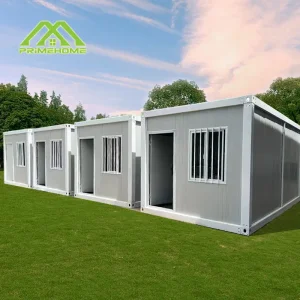
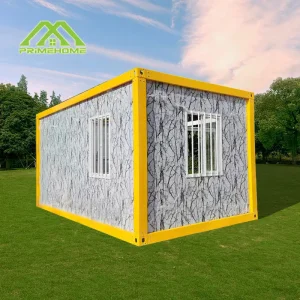
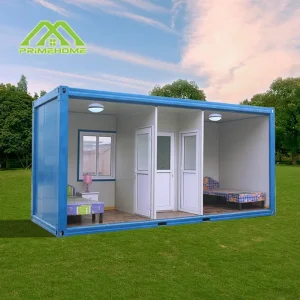
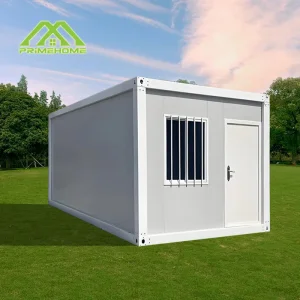
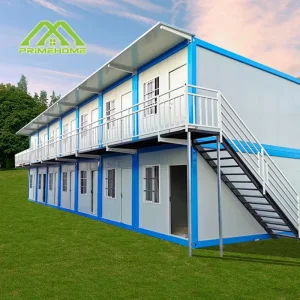
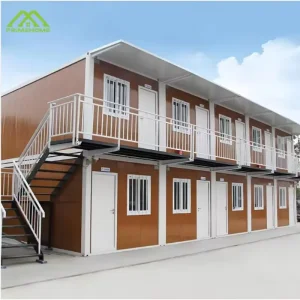
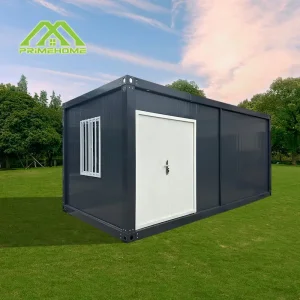
Complete Modular & Prefabricated Container House Series for Brazil
Explore our full line of B2B container solutions available for direct export from China to Brazilian commercial ports (Santos, Paranaguá, Rio Grande, and Suape).
Navigating Import Duties, SISCOMEX Clearance & Local Assembly in Brazil
A comprehensive strategic guide for Brazilian importers, general contractors, and developers procuring container structures from China.
HS Code & NCM Classification
Our container structures are exported under NCM Code 9406.90.20 (Prefabricated Buildings with Steel Frames). We provide complete commercial invoices, packing lists, and Certificates of Origin (Form E/CO) to expedite clearance via Siscomex.
Ocean Freight & Cabotage Logistics
Flat-pack and expandable models ship in standard 40ft High Cube ocean containers. We optimize packing density so a single 40HQ accommodates up to 8 flat-pack units or 2 fully expandable units, reducing maritime freight cost per square meter by up to 60%.
CREA Structural Memory Dossier
To assist Brazilian engineers in signing technical responsibility documents (*ART - Anotação de Responsabilidade Técnica*) with local CREA boards, we supply comprehensive structural calculations memory, wind load certificates, and foundation connection blueprints.
Tax & Import Tariff Optimization Note:
Importers in Brazil can take advantage of Ex-Tarifário tax reductions when importing high-efficiency prefabricated steel modular systems not domestically produced with equivalent technology. Contact our trade compliance department for documentation assistance.
Frequently Asked Questions by Brazilian Developers & Buyers
In-depth answers addressing structural durability, Brazilian legal codes, thermal comfort, transport, and procurement logistics.