
Top-Tier Expandable Container Systems for SA Projects
Rapidly deployable fold-out structural cabins configured specifically for Southern African mining camps, ecotourism lodges, and residential developments.
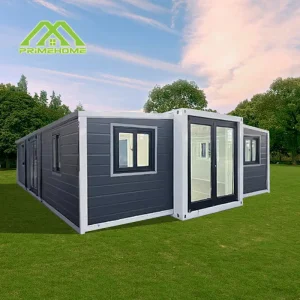
Custom Luxury Prefabricated Double-Wing Expandable Container House – Readymade Fold-Out Homes
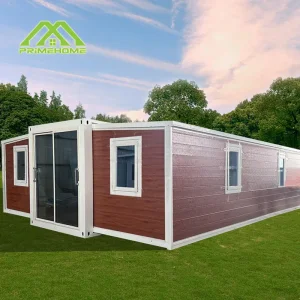
Custom Factory Direct 20ft/30ft/40ft Double-Wing Foldable Container Cabin with Bathroom
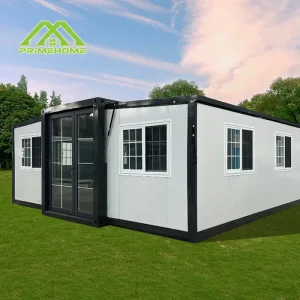
China Brand New High-Quality Expandable Houses with Single or Double Wings – Customizable
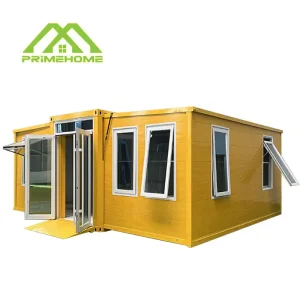
Wholesale Sliding and Folding Expansion House Efficient Modular Double Wings
South Africa’s Structural Housing Deficit & The Modular Revolution
South Africa is undergoing a profound paradigm shift in civil engineering, urban planning, and remote infrastructure development. As conventional brick-and-mortar construction struggles with escalating material inflation, supply chain bottlenecks, and prolonged build cycles, expandable container houses have transitioned from alternative temporary shelters to primary strategic assets for commercial, industrial, and residential developers.
Energy Vulnerability & Load-Shedding Microgrid Integration
The operational reality of South Africa requires structural solutions built for grid instability. Expandable container units manufactured for the local market feature custom-engineered roof reinforcement and pre-wired conduit channels specifically designed for direct hybrid solar photovoltaic (PV) array installations and lithium-ion battery energy storage systems (BESS). Combined with high-efficiency thermal envelopes, these structures mitigate grid dependency across Gauteng, the Western Cape, and remote rural territories.
Mining, Energy & Infrastructure Worker Housing Demand
With major resource extraction corridors in the Northern Cape (Manganese, Iron Ore) and Limpopo (Platinum Group Metals), mining operators require semi-permanent, high-durability camp accommodation. The double-wing expandable container system allows 37 square meters of usable, fully insulated living space to be transported within a standard 20ft ISO container shipping footprint, drastically reducing freight expenditure across the N1 and N3 logistics corridors while meeting strict ESG worker welfare mandates.
Ecotourism & Wilderness Glamping Surge
South Africa’s hospitality sector—spanning the Kruger Lowveld, the Garden Route, and KwaZulu-Natal’s Elephant Coast—demands luxury architectural units with minimal environmental site disturbance. Expandable container cabins offer floor-to-ceiling double-glazed thermal glass facades, automated wing extension mechanisms, and luxury interior fit-outs that can be installed on screw-pile foundations in sensitive ecological reserves without concrete pouring.
Rapid Urban Infill & Backyard Dwelling Economy
Metropolitan spatial constraints in Johannesburg, Cape Town, and Durban have accelerated the adoption of expandable micro-homes for rental revenue generation, suburban densification, and multi-generational housing. Factory-built precision ensures rapid 2-hour field assembly, allowing property owners to bypass traditional 9-month construction timelines.
Performance & Global Supply Metrics
Engineering Blueprint & SANS Compliance Matrix
Navigating South Africa's regulatory landscape requires strict adherence to National Building Regulations and local structural standards. Our expandable container units are fabricated with hot-dip galvanized cold-formed steel profiles engineered to exceed international modular codes and align with **SANS 10400** structural, thermal, and fire requirements.
| Engineering Parameter | Factory Baseline Standard | South Africa Market Customization (SANS 10400 Ready) | Operational Impact |
|---|---|---|---|
| Structural Frame | Q235B Galvanized Steel Chassis (2.5mm - 3.0mm) | Heavy-Duty Q355B Hot-Dip Galvanized Frame + Anti-Corrosive Epoxy Primer | Prevents rust degradation in coastal zones (Cape Town, Durban, East London). |
| Thermal Envelope (Walls) | 50mm EPS / Glass Wool Sandwich Panel | 75mm / 100mm High-Density Polyurethane (PU) or Rockwool ($\lambda \le 0.022 W/m\cdot K$) | Maintains low interior temperatures under intense Highveld solar radiation. |
| Roof Structure & Drainage | Integrated Truss with 0.5mm Steel Sheet | Dual-Slope Galvanized Roof + Hidden Rainwater Gutter & Downspout Channels | Handles heavy summer downpours in Mpumalanga & Highveld thunderstorms. |
| Electrical Wiring | Standard IEC Modular Wiring Systems | SANS 10142-1 Compliant Wiring, DB Board, Earth Leakage & Pre-Wired Inverter Port | Allows immediate plug-and-play integration with Victron / Sunsynk solar setups. |
| Fire Safety Compliance | B1 Flame Retardant Panels | SANS 10400-T Class 1 Fire-Rated Non-Combustible Rockwool Insulation | Passes municipal building inspector sign-off for commercial camp permits. |
| Glazing & Fenestration | Single Tempered Glass Windows | Double-Glazed Low-E Tempered Argon-Filled Glass with Heavy Aluminum Frames | Blocks thermal radiation while resisting coastal wind pressures up to 1.5 kPa. |
Global Factory Procurement Strategies for South African Importers
Direct factory procurement offers commercial developers and public sector procurement teams unprecedented cost efficiencies. However, successfully importing expandable container houses into Southern Africa requires an end-to-end understanding of ocean logistics, customs clearance, and regional deployment logistics.
Port Logistics & Freight Optimization (Durban & Cape Town)
The core economic advantage of expandable container homes lies in their volumetric compactability during shipping. A standard 40ft High Cube (HC) shipping container can transport up to **2 complete 20ft double-wing expandable units** or **1 massive 40ft expandable luxury cabin**. By shipping units in their fully collapsed state, international freight charges are reduced by up to 66% compared to pre-assembled modular structures.
Our logistics team coordinates seamless export documentation, bill of lading (B/L) processing, and custom tariff code classification (HS Code 9406.90 - Prefabricated Buildings), facilitating rapid customs clearance at the Port of Durban, Cape Town Harbour, or Coega (Gqeberha).
Inland Road Transit & Cross-Border SADC Distribution
For landlocked projects across Gauteng, the Free State, or neighboring SADC territories (Botswana, Namibia, Zimbabwe, Mozambique, Zambia), freight routes are optimized for flatbed trailer transport. Expandable containers utilize standard ISO corner castings, allowing standard twist-lock securing on heavy transport vehicles without requiring specialized abnormal load permits.
Upon site arrival, a standard 10-ton truck crane or rough-terrain forklift can offload and position the unit onto concrete strip footings, compacted gravel beds, or engineered ground screws.
The Next Generation of Off-Grid Modular Architecture
As sustainable building technologies mature, expandable container engineering is evolving beyond simple spatial efficiency. Our manufacturing roadmap focuses on intelligent automation, advanced material science, and closed-loop utility autonomy.
Smart IoT & BESS Energy Storage Integration
Future iterations feature built-in smart electrical busbars that communicate directly with residential battery storage units and rooftop solar panels. Integrated telemetry dashboards provide real-time thermal performance tracking, battery state-of-charge monitoring, and automated climate control optimization via mobile applications.
Zero-Waste Closed-Loop Water Management
Addressing South Africa’s regional water scarcity, next-gen expandable units feature dual-plumbing greywater separation conduits, integrated roof rainwater harvesting channels, and optional plug-and-play blackwater membrane bioreactor (MBR) filtration modules for off-grid sanitation autonomy.
Automated Hydraulic Wing Expansion Systems
Eliminating manual levering, upcoming enterprise models feature push-button electro-hydraulic extension actuators. The side wings unfold autonomously within 8 minutes, supported by self-leveling hydraulic stabilizer legs for rapid setup in uneven terrain.
Frequently Asked Questions for South African Importers & Developers
Expert insights addressing regulatory, financial, structural, and logistical queries regarding container house deployment in SA.
Explore Our Complete Expandable & Modular Lineup
Select from our comprehensive range of expandable container homes, glamping pods, and multi-purpose modular units designed for global export.
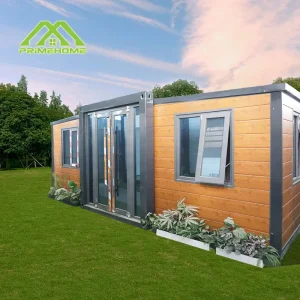
Custom Customized 20ft/40ft Expandable Container House – Modern Luxury Villa Collapsible Container
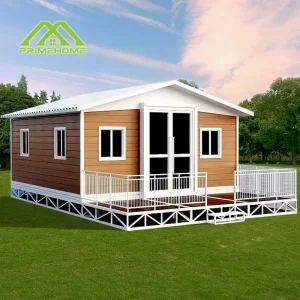
High-Quality Movable Expansion Box Room Fold-Out Container Homes – Collapsible Supplier
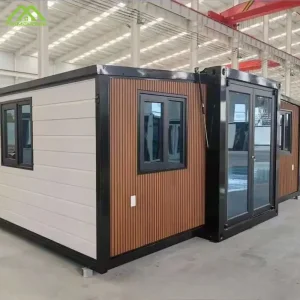
Wholesale 3-Bedroom Luxury Prefab Extension House – Micro Portable & Foldable Cost-Effective
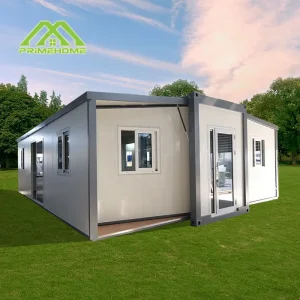
High-Quality Outdoor Life Portable Modern Mobile Home with Bathroom – Sustainable & Collapsible
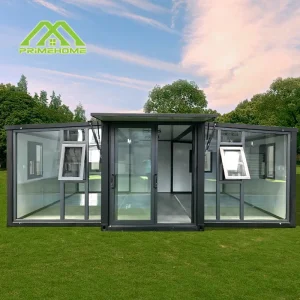
Custom Temporary Mobile Housing Preferred Space – Stackable Storage Multi-Purpose Expansion
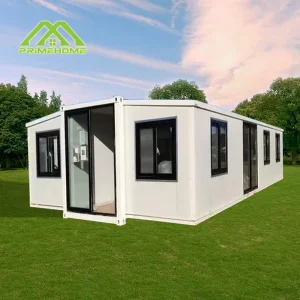
Custom 3 in 1 Double-Wing Foldable Container House – Soundproof Sustainable Villa Apartment
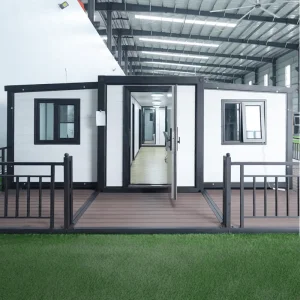
Custom Luxury 40FT Double Wing Expandable Container Villa – Glamping Resort House
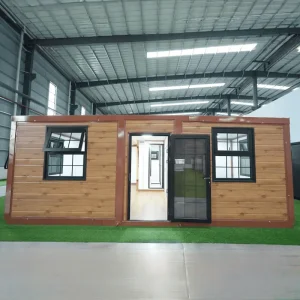
China 20FT Factory Direct Galvanized Steel Prefab House – Double Wing Container for Construction Camps
Partner with China's Premier Modular Factory
Empower your South African housing, mining camp, or hospitality project with direct factory engineering expertise, wholesale pricing, and reliable global delivery.