
Featured Detachable & Modular Cabin Systems
Direct-factory prefabricated modular structures engineered for instant installation, climate protection, and long-term durability across South American territories.
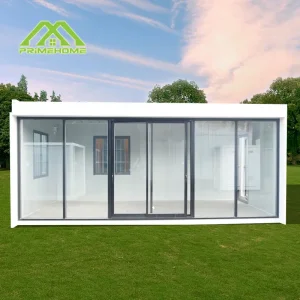
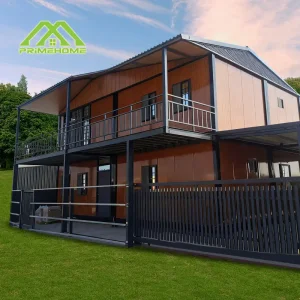
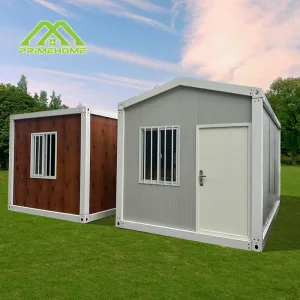
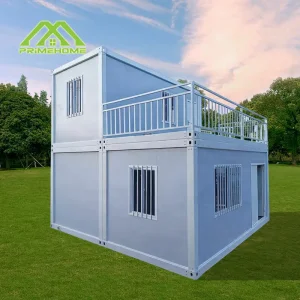
Uruguayan Industrial & Commercial Landscape for Modular Construction
Analyzing structural demand drivers, maritime import channels, thermal performance compliance, and economic expansion in South America’s Southern Cone.
Macroeconomic Growth & Infrastructure Demand in Uruguay
Uruguay has established itself as an economic beacon within Latin America, backed by robust institutional stability, high GDP per capita, and progressive investment frameworks under the Comisión de Aplicación de la Ley de Inversiones (COMAP). Key economic sectors—ranging from massive agribusiness expansion in Durazno, Tacuarembó, and Soriano to major forestry megaprojects (such as UPM 2 cellulose facilities) and green hydrogen initiatives in Paso de los Toros—require rapid site infrastructure deployment. Traditional concrete construction in Uruguay faces challenges including elevated local labor expenses, lengthy municipal approval cycles, and supply chain delays for raw materials. Detachable container houses engineered in China offer Uruguayan general contractors, mining operations, and government housing entities an off-site, prefabricated alternative that cuts overall project deployment timelines by up to 70% while drastically reducing total expenditure per square meter.
Coastal Climate Adaptability & Marine Corrosion Resistance
Operating along the Atlantic coast—from the bustling port logistics hub of Montevideo to high-end eco-tourism corridors in Punta del Este, La Barra, and José Ignacio (Maldonado and Rocha departments)—demands specialized material science. Marine atmospheric conditions present high levels of airborne sodium chloride, humidity, and intense wind loads driven by South Atlantic weather patterns. Standard structural steel degrades rapidly under C4/C5 coastal environments if uninsulated or poorly coated. Our export-grade detachable container units feature heavy-duty Q235B/Q345B hot-dip galvanized steel frames treated with anti-corrosive fluorocarbon epoxy coatings, combined with high-density polyurethane (PU) or Rockwool sandwich panels. This structural configuration provides exceptional thermal resistance (low K-value), zero water permeability, and complete structural integrity under wind speeds exceeding 120 km/h, satisfying Uruguay's strict building energy efficiency standards.
China Prefabrication Superiority & Supply Chain Synergy
How Suzhou's advanced manufacturing clusters optimize raw material purchasing, precision robotics, and international export packaging for South American buyers.
Suzhou Steel Cluster Efficiency
Our 28,000 m² automated manufacturing facility located in Suzhou, China leverages direct upstream sourcing of premium cold-formed galvanized coil steel from tier-1 mills (Baosteel/Shougang). By integrating robotic laser profiling, automated stamping, and continuous powder-coating assembly lines, we eliminate structural tolerances down to ±0.5mm, delivering unmatched production throughput exceeding 5,000 standardized units per month.
Knock-Down (KD) Logistics Packing
Logistics costs directly impact international procurement feasibility. Unlike fully assembled shipping containers that transport empty volumetric air, our detachable container system utilizes an engineered knock-down structural frame. A single 40ft High Cube (HQ) ocean shipping container transports up to 10–12 complete detachable container house units, dramatically lowering per-unit maritime freight to the Port of Montevideo.
International E-E-A-T Quality Standards
Every structural batch undergoes rigorous quality assurance protocols, including structural load-bearing simulation, water-tightness pressure spraying tests, and acoustic transmission coefficient audits. Our modular units carry full ISO9001, ISO14001, CE, and EN1090 structural certifications, ensuring seamless local compliance alignment with LATU (Laboratorio Tecnológico del Uruguay) requirements.
Engineering Specification & Structural Comparison Matrix
A comprehensive technical comparison evaluating Detachable Container Houses against Flat-Pack and Traditional Brick & Mortar construction for Uruguayan commercial buyers.
| Performance / Feature Parameters | Detachable Container House (PrimeHome) | Standard Flat-Pack Container | Traditional Brick & Concrete |
|---|---|---|---|
| Main Structural Frame | 2.5mm–3.0mm Q235B Hot-Dip Galvanized Steel Frame with Corner Castings | 2.0mm Painted Cold-Rolled Steel Frame | Reinforced Concrete Columns & Ceramic Brickwork |
| Assembly Efficiency (4 Workers) | 1 Unit completed in 3 Hours (Bolted Joint Assembly) | 1 Unit completed in 5 Hours | 30–60 Days construction duration |
| Shipping Density (40ft HQ Container) | 10 to 12 Units (Knock-Down Component Packaging) | 6 to 8 Units (Flat-Packed) | N/A (Raw building materials shipped individually) |
| Thermal Insulation & Fire Rating | 50mm/75mm/100mm Rockwool or PU Panels (Class A Non-Combustible) | 50mm EPS Sandwich Panel (Class B2) | Variable insulation, requires secondary drywall coating |
| Wind & Seismic Resistance | Wind: Up to 120 km/h (Scale 11) | Seismic: Grade 8 | Wind: Up to 90 km/h | Seismic: Grade 6 | High seismic stability | Prone to cracking over coastal soils |
| Surface Treatment & Anti-Corrosion | Electrostatic Powder Coating + Fluorocarbon Marine Finish (C4-C5 Rating) | Standard Primer + Double Layer Synthetic Painting | Exterior Acrylic Paint (Requires periodic repainting) |
| Operational Lifespan | 25+ Years with minimal structural maintenance | 10–15 Years | 50+ Years |
| Relocation & Reusability | 100% Demountable, Reusable & Stackable up to 3 Stories | Limited relocation cycles | Permanent demolition required |
Localized Modular Applications Across Uruguay's Economy
From inland agricultural command centers to coastal luxury boutique resorts, our detachable container modules adapt to any operational context.
1. Agricultural & Agribusiness Field Headquarters (Estancias & Silos)
Uruguay’s agricultural core—spanning departments such as Paysandú, Rio Negro, and Soriano—requires operational field hubs, administrative offices, and seasonal worker accommodation. Our detachable container modules provide air-conditioned, dust-proof, and rodent-impermeable environments that can be set up directly on compact soil or simplified concrete piers without extensive foundation excavation. Integrated sanitary units, kitchenettes, and office partition walls allow farm managers to establish fully functional headquarters in days.
2. Coastal Eco-Resorts & Glamping Hospitality (Rocha & Maldonado)
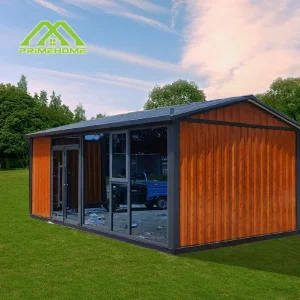
The booming eco-tourism and boutique lodging sector in Punta del Diablo, Cabo Polonio, José Ignacio, and La Paloma demands aesthetically refined, low-impact architectural structures. Our customized detachable containers and Apple Cabin series feature floor-to-ceiling double-glazed tempered panoramic windows, smart digital locks, integrated terrace decks, and high-end timber-composite exterior cladding. These units respect sensitive coastal ecosystems while offering tourists modern luxury stay experiences.
3. Forestry, Mining & Energy Workforce Camps (Paso de los Toros)
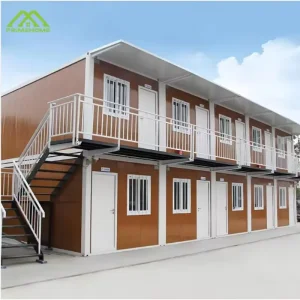
Large-scale industrial developments, pulp mill expansions, and renewable energy installations (wind farms and solar parks) require scalable modular dormitories capable of housing hundreds of technicians. Detachable container units can be multi-stacked into 2-story or 3-story residential complexes complete with central laundry modules, dining halls, recreation centers, and specialized electrical control rooms engineered to South American 220V/50Hz grid standards.
4. Urban Commercial Pop-Ups & Logistics Hubs (Montevideo Free Zones)
Within urban centers and industrial tax-free parks such as Zonamerica and Parque de las Ciencias near Montevideo, businesses utilize detachable modules as modern coffee bars, security checkpoints, temporary retail pop-up stores, and site management suites. The demountable nature allows commercial operators to relocate units smoothly when land leases expire or site layouts evolve.
End-to-End Import & Shipping Playbook for Uruguay
A structured step-by-step roadmap from technical design alignment to maritime freight landing at the Port of Montevideo.
Step 1: Engineering & Layout Approval
Our bilingual structural engineers work with your team to finalize CAD floor plans, structural loading requirements, electrical conduit routes (certified for Uruguayan standard plugs and 220V voltage), window placements, and interior finish schedules. Architectural 3D renderings are provided for municipal permitting.
Step 2: Precision Manufacturing & Quality QA
Components undergo CNC automated cutting, robotized frame welding, zinc anti-corrosion galvanization, and thermal sandwich panel assembly. Factory quality control inspectors verify paint thickness, corner joint tolerances, panel density, and electrical integrity prior to export packaging.
Step 3: Ocean Shipping & Montevideo Customs Landing
Knock-down components are compactly bundled and loaded into 40ft High Cube containers. We manage full export documentation (Bill of Lading, Commercial Invoice, Packing List, Certificate of Origin). Vessels arrive at Puerto de Montevideo, where your local customs broker handles import clearance and inland trucking via Ruta 1, Ruta 5, or Ruta 8.
Frequently Asked Questions (FAQ) for Imports to Uruguay
Technical, logistical, and commercial inquiries answered by our senior modular engineering team.
How long does shipping take from your factory in Suzhou to the Port of Montevideo?
Production lead time at our factory typically ranges from 12 to 20 days depending on project order volume and customization specifications. Ocean transit from major Chinese shipping hubs (Shanghai or Ningbo) to the Port of Montevideo, Uruguay generally takes between 35 and 45 transit days. We coordinate directly with top-tier international ocean carriers (COSCO, Maersk, MSC) to secure competitive freight rates and direct maritime routes.
Can detachable container houses withstand Uruguay's coastal wind and winter humidity?
Yes. Our detachable container structures are specifically engineered for harsh coastal climates. The structural framework utilizes high-strength Q235B/Q345B hot-dip galvanized steel treated with C4/C5 marine-grade fluorocarbon coatings to prevent rust and salt spray degradation. Wall panels are constructed with high-density Rockwool or Polyurethane (PU) insulation, preventing interior condensation during humid winter months along the Rio de la Plata and Atlantic coastlines, while resisting wind pressures up to 120 km/h.
What specialized machinery or tools are required to assemble a detachable container unit on site?
Assembly is fast and straightforward, requiring no heavy cranes or welding equipment on site. Four basic construction workers equipped with standard electric hand drills, wrenches, scaffolding, and safety gear can fully erect one standardized 20ft detachable container unit in approximately 3 to 4 hours. All structural members feature pre-drilled precision bolt holes, rubber sealing gaskets, and plug-and-play connections.
Are electrical and plumbing systems customized for Uruguayan national standards?
Absolutely. We pre-integrate electrical wiring, distribution boxes, circuit breakers, lighting, and wall outlets engineered to Uruguay’s 220V / 50Hz single-phase or 380V three-phase electrical standards (incorporating Type L/C grounding configurations). Plumbing supply and drainage lines utilize high-grade PPR and PVC piping compatible with local utility connections or off-grid septic systems.
What is the structural lifespan of PrimeHome detachable container houses?
With standard periodic maintenance (such as inspecting roof silicone seals and touch-up painting exposed hardware after extreme weather events), our heavy-duty detachable container houses have an operational design lifespan exceeding 25 to 30 years. Their demountable nature allows them to be dismantled, packed, and re-erected across multiple project sites over their service life without losing structural rigidity.
How do detachable container houses compare in cost against locally built traditional structures in Uruguay?
Importing prefabricated detachable container units from our factory yields overall cost savings between 30% and 50% compared to traditional brick-and-mortar or local drywall construction in Uruguay. Primary savings stem from reduced local job-site labor hours, minimized material waste, lower foundation preparation expenses, and high ocean-freight packaging density (packing up to 12 units per 40ft HQ container).
Can units be stacked to build multi-story offices or accommodations?
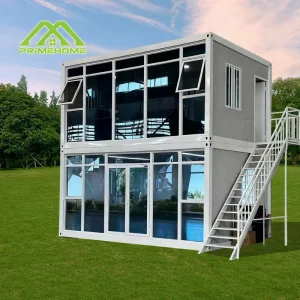
Yes. Our reinforced structural corner castings and heavy gauge steel columns allow detachable container units to be stacked safely up to 3 stories high without external structural steel skeletons. Inter-module structural lock connectors, exterior staircases, walkway balconies, and customized glass curtain walls can be integrated into multi-story camp developments.
What foundation preparation is required prior to unit delivery?
Detachable container houses do not require costly continuous deep concrete foundations. They can be installed on simple concrete corner pads, strip foundations, compacted gravel beds, or adjustable screw-pile piers. Our engineering team provides foundation load distribution drawings tailored to your site's soil condition.
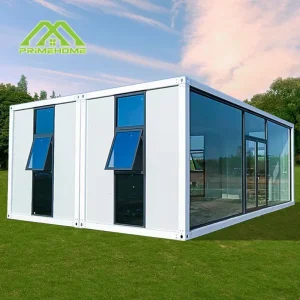
Explore Complete Modular & Container Housing Options
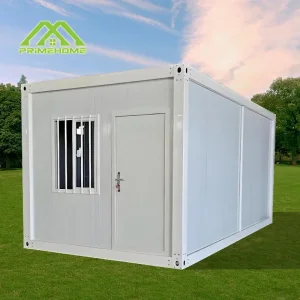
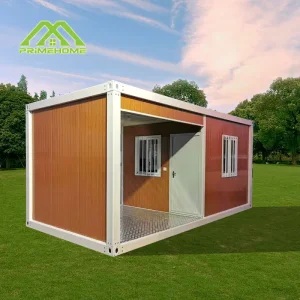
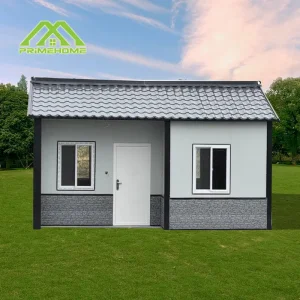
Review our comprehensive series of demountable, foldable, and customized luxury residential modules configured for rapid global export.
Ready to Accelerate Your Modular Development in Uruguay?
Contact our senior structural engineering team today to receive CAD layout proposals, complete technical datasheets, and direct factory-gate pricing tailored to your port of destination.
Send Inquiry Now