
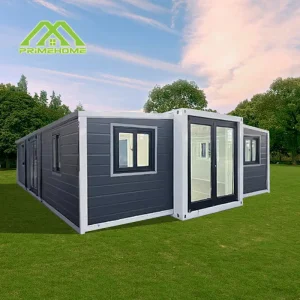
Premium double-wing fold-out architecture featuring integrated galvanized steel framing, panoramic double-pane glazing, and pre-fitted plumbing designed for Moroccan glamping resorts and VIP site housing.
View SpecificationsFactory-direct 20ft and 40ft double-wing expandable units engineered for rapid assembly, thermal efficiency in Sahara heat, and high structural resilience.
Premium double-wing fold-out architecture featuring integrated galvanized steel framing, panoramic double-pane glazing, and pre-fitted plumbing designed for Moroccan glamping resorts and VIP site housing.
View Specifications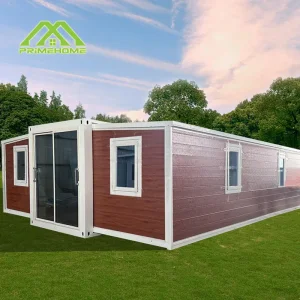
Self-contained 20ft to 40ft expandable cabins equipped with turnkey wet-pod bathrooms, Polyurethane foam thermal insulation, and rapid fold-out wing deployment in under 2 hours.
View Specifications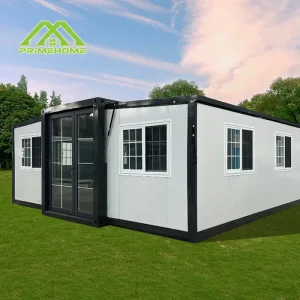
Flexible single and double-wing modular layouts designed for scalable contractor camps, emergency shelters, and suburban residential developments across Casablanca and Tangier.
View Specifications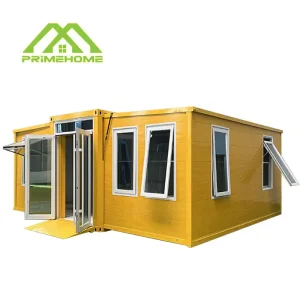
Heavy-duty sliding mechanical joint system offering high structural stability, C3-grade anti-corrosion coating for Atlantic coastal environments, and compact logistics transport factor.
View SpecificationsGet custom floor plans, technical compliance reports (RPS 2011 seismic & thermal envelope ratings), and direct factory freight quotes to Tanger Med or Casablanca Port.
An analysis of macro-industrial transformation, mega-events, and regional climate imperatives accelerating expandable container house adoption.
The Kingdom of Morocco is undergoing an unprecedented infrastructure transformation. Driven by national initiatives such as the Plan Énergie Solaire (NOOR), massive expansion of industrial ecosystems in the Tanger Med Special Economic Zone, large-scale phosphate development programs by the OCP Group in Khouribga, and extensive urban modernization ahead of the 2030 FIFA World Cup, traditional brick-and-mortar construction timelines are facing severe bottlenecks.
In this dynamic macroeconomic landscape, Custom Expandable Container Houses have emerged as the premier structural building technology. By combining precision off-site prefabrication in controlled factory conditions with rapid double-wing mechanical deployment, project developers in Casablanca, Rabat, Marrakech, Agadir, and Laâyoune can achieve occupancy-ready space up to 75% faster than conventional concrete methods.
How advanced double-wing expansion engineering overcomes sandstorms, high salinity coastal corrosion, and extreme ambient temperature swings.
Constructed with cold-formed, hot-dip galvanized Q235B/Q355B steel profiles. Frame members undergo continuous C3/C4 marine-grade anti-corrosion epoxy painting, delivering 30+ years lifespan along Atlantic coastal regions like Tangier and Casablanca.
Utilizes 50mm to 100mm high-density Polyisocyanurate (PIR) or Polyurethane (PU) sandwich wall panels (Thermal Conductivity ≤ 0.022 W/m·K). Reduces HVAC power consumption by up to 45% during intense summer heat in inland Marrakech and Ouarzazate.
Heavy-duty gear-assisted sliding hinge system allowing a single standard 20ft or 40ft shipping footprint to unfold into 3x usable interior floor space (from ~15 m² up to ~72 m²) within 90 minutes using basic mechanical winches.
| Engineering Parameter | Technical Specification | Moroccan Regulatory / Climate Benchmark |
|---|---|---|
| Seismic Resistance | Magnitude 8.0 / Zone 4 Peak Ground Acceleration (PGA = 0.32g) | Exceeds RPS 2011 (Règlement de Construction Parasismique Marocain) |
| Wind Load Capacity | 120 km/h (Up to Beaufort Scale 12 structural pressure resistance) | Tested for coastal wind gusts (Tangier Strait & Southern Atlantic region) |
| Thermal Insulation (U-Value) | Wall Panel U = 0.32 W/m²K | Roof Panel U = 0.28 W/m²K | Complies with RTCM (Réglementation Thermique des Bâtiments au Maroc) |
| Fire Performance Rating | Class B1 / A Non-Combustible PIR Core; 60-min fire resistance rating | NM (Norme Marocaine) & Civil Protection Safety Certification Ready |
| Floor Load Bearing | 2.5 kN/m² Live Load; 3.0 mm PVC / Fiber Cement Board subfloor | Heavy-duty commercial & multi-person residential standard |
| Glazing System | Double-pane tempered Low-E glass (5mm + 12Ar + 5mm) with thermal-break aluminum frame | Maximum solar heat gain coefficient (SHGC) reduction for desert UV radiation |
While fully automated hydraulic unfolding systems seem appealing, field engineering data across North African desert environments proves that heavy-duty gear-assisted manual mechanical winches yield a 99.4% operational reliability rate. Fine silica sand in regions like Merzouga and Zagora frequently damages hydraulic seals, leading to pressure fluid leaks and structural locking. Our expandable container houses feature dust-sealed mechanical gearing, guaranteeing flawless unfolding without requiring specialized hydraulic maintenance teams on remote sites.
Bridging Chinese precision manufacturing capabilities with local Moroccan delivery networks and customs frameworks.
The global modular construction market is projected to reach $145 Billion by 2030, driven by off-site industrialization. However, importing prefabricated homes into Morocco requires overcoming unique localized hurdles: complex customs documentation at Tanger Med Port, strict compliance with Moroccan Norms (NM), logistics restrictions on regional narrow roads in the High Atlas, and specific aesthetic preferences matching traditional Maghrebi architectural elements.
As a specialized factory-direct manufacturer, we bridge this gap by providing tailored solutions:
From luxury glamping reserves in Agafay to high-tech industrial office complexes in Nador West Med.
Key Locations: Agafay Desert, Merzouga, Taghazout, Ouarzazate.
Double-wing expandable villas fitted with panoramic floor-to-ceiling glass walls, luxury master suites, and off-grid solar integrations create high-yielding eco-lodges that blend into natural topography with zero foundation scarring.
Key Locations: Khouribga, Benguerir, Jorf Lasfar, Laâyoune.
Stackable, high-density worker dormitories, dining halls, and administrative offices built for OCP mining contractors and solar facility construction crews requiring air-conditioned, fire-safe, and sandstorm-sealed living units.
Key Locations: A1/A2/A3 Motorway Networks, Tanger Med Logistics Hub.
Rapid-assembly modular retail stores, coffee shops, and security control centers deployed along expanding highway networks, operational in days without obstructing traffic flows.
Complete international logistics management, customs duty optimization, and localized installation guidance.
Navigating international shipping and customs clearance in Morocco requires experienced logistics coordination. We offer complete CIF (Cost, Insurance, Freight) and DDP (Delivered Duty Paid) services through premier shipping lines (CMA CGM, Maersk, MSC) directly to Moroccan ports of entry.
| Destination Port | Average Shipping Lead Time | Customs Clearance Protocols | Target Regional Delivery Zones |
|---|---|---|---|
| Tanger Med (Port de Tanger-Méditerranée) | 22 - 28 Days (Direct Freight) | Bordereau de Suivi des Cargaisons (BSC) & Conformity Certificate (CoC) | Tangier, Tetouan, Nador, Kenitra industrial hubs |
| Casablanca Port (Port de Casablanca) | 25 - 30 Days | Customs Duty HS Code 9406.90 (Prefabricated Buildings) declaration | Casablanca, Rabat, El Jadida, Marrakech, Mohammedia |
| Agadir Port (Port d'Agadir) | 28 - 34 Days | Direct Southern logistics transit documentation | Agadir, Taghazout, Taroudant, Ouarzazate, Laâyoune |
Integrating smart home automation, off-grid solar micro-grids, and circular lifecycle building materials.
Pre-engineered structural mounting points for ultra-lightweight flexible solar panels (up to 5kWp per 20ft expandable unit) paired with lithium-ion battery storage wall systems, ensuring 100% off-grid power autonomy in remote southern Moroccan desert areas.
Integrated closed-loop water treatment units and IoT-enabled climate management systems that dynamically optimize interior temperature according to ambient Moroccan solar cycles, reducing overall energy demand.
Manufactured from 100% recyclable structural steel and non-toxic insulation materials, supporting Morocco's Stratégie Nationale de Développement Durable (SNDD) by eliminating construction site waste and land degradation.
Detailed technical, commercial, and logistical answers curated for project procurement managers and engineering consultants.
Our expandable container houses are specifically engineered for harsh climate extremes. They feature a continuous thermal break envelope constructed with 75mm or 100mm high-density PIR/PU sandwich panels (thermal conductivity ≤ 0.022 W/m·K) and double-glazed Low-E tempered glass windows. This reduces solar thermal radiation transfer into the room by up to 80%, allowing standard split AC units to maintain a comfortable 22°C inside even when exterior ambient desert temperatures exceed 50°C in places like Ouarzazate or Tata.
Yes. Following the structural lessons of the 2023 Al Haouz earthquake, our light-gauge cold-formed galvanized steel structural framework is engineered for high ductility. The flexible structural joints absorb seismic shockwaves up to Peak Ground Acceleration (PGA) values of 0.32g, far exceeding the baseline requirements of Morocco's RPS 2011 (Règlement de Construction Parasismique) Zone 4 seismic hazard ratings.
Unlike traditional concrete structures requiring deep continuous footings, expandable container houses require minimal ground preparation. A simple reinforced concrete pad at key corner bearing points, or a level compacted gravel bed with concrete masonry pier blocks, is sufficient. Adjustable leveling outriggers integrated into the container steel frame compensate for minor terrain variations, making them ideal for ecologically sensitive areas like Agafay or mountain sites in Azrou.
Expandable units ship folded into standard ISO container dimensions, allowing them to be loaded onto conventional container vessels directly to Tanger Med or Casablanca Port under HS Code 9406.90 (Prefabricated Buildings). We provide complete commercial invoices, packing lists, Certificate of Origin (COO), and Conformity Certificates (CoC) to ensure smooth clearance through Administration des Douanes et Impôts Indirects (ADII).
All structural steel members feature hot-dip galvanization (minimum 120g/m² zinc coating) combined with C3/C4 anti-corrosion baking paint finish, guaranteeing a main structural design lifespan of 30+ years even in humid coastal marine environments like Agadir or Essaouira. We provide a 10-year warranty on the main steel structure and a 2-year warranty on interior MEP systems, doors, and window seals.
Explore our full line of customizable 20ft, 30ft, and 40ft fold-out villas, multi-bedroom homes, and modular camp units engineered for the global and Moroccan market.
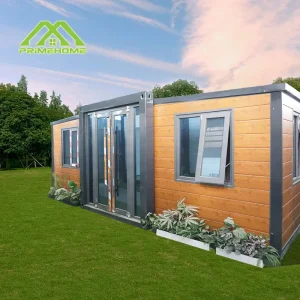
Architectural-grade luxury 40ft fold-out container villa offering expansive open-plan living rooms, master suites, and designer kitchens tailored for high-end resort living in Marrakech.
View Specifications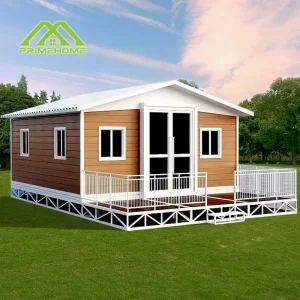
Compact movable box rooms designed for quick pop-up retail stores, administrative security checkpoints, and suburban annex housing across Tangier and Casablanca.
View Specifications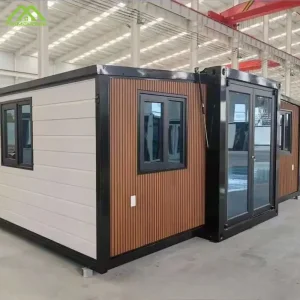
Family-sized 3-bedroom foldable layout featuring integrated thermal insulation, soundproof partition walls, and complete pre-wired electrical networks for rapid residential deployment.
View Specifications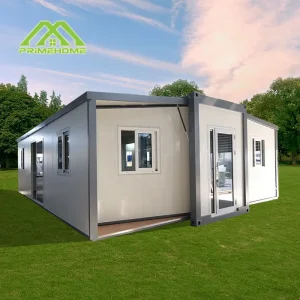
Off-grid ready portable mobile home fitted with pre-assembled wet-pod bathroom, solar roof ready structure, and durable weather-resistant composite wall finishes.
View Specifications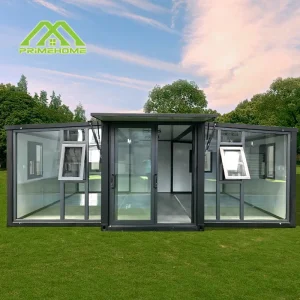
Multi-purpose stackable modular container units engineered for rapid assembly in construction worker camps, disaster relief housing, and temporary equipment storage facilities.
View Specifications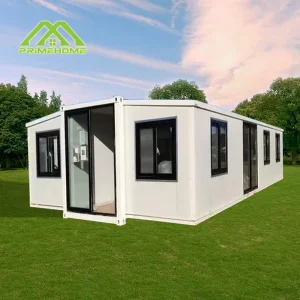
Innovative 3-in-1 expandable apartment module delivering superior acoustics, PIR thermal insulation, and complete turnkey interior decoration for modular luxury housing projects.
View Specifications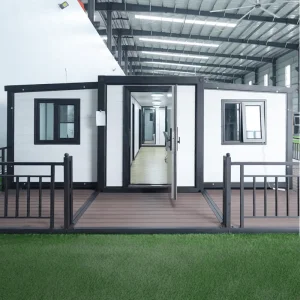
Grand 40ft resort villa module featuring expandable side suites, luxury interior finishes, and integrated solar canopy options designed for Agafay and Atlas Mountain eco-resorts.
View Specifications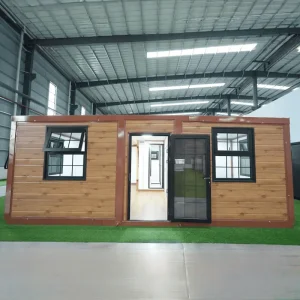
Factory-direct heavy-duty galvanized steel camp housing unit providing quick-assembly dorms, dining rooms, and field offices for major infrastructure contractors in Morocco.
View SpecificationsContact our engineering and export team today for customized architectural drawings, Moroccan standard compliance packs, and factory-direct wholesale quotes.