
Immediate Deployment Series
Houston-Ready Flat Pack Modular Homes & Pods
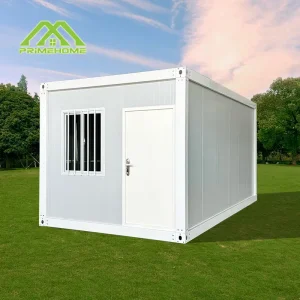
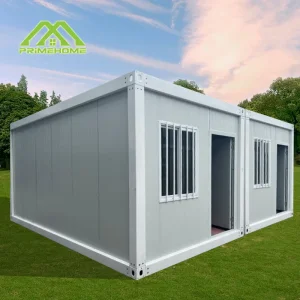
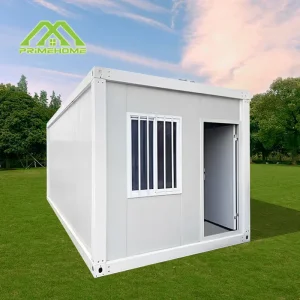
High-density, rapid-assembly container structures precision-engineered in China, factory-tested for Texas wind-load profiles and high humidity.
Strategic Regional Insight
The Greater Houston Modular Infrastructure Boom: Climate & Economic Imperatives
As the primary energy capital of North America and a pivotal logistics hub along the US Gulf Coast, Houston, Texas presents a unique environment for industrial expansion and commercial real estate development. With rapid industrial growth surrounding the Houston Ship Channel, the Energy Corridor, and suburban hubs in Harris, Fort Bend, and Montgomery counties, project developers face severe headwinds: escalating stick-built construction overheads, severe skilled labor shortages, and stringent structural compliance codes tailored to coastal weather risks.
Houston’s geographical positioning subjects commercial and temporary housing structures to intense environmental stressors: extended sub-tropical summer heat (exceeding 100°F with extreme humidity), severe tropical moisture causing accelerated metal oxidation, and coastal storm vectors requiring resistance to hurricane wind speeds up to ASCE 7-16 guidelines (140–160 mph risk categories). Traditional site-built structures require extended timeline buffers, triggering capital risk for energy sector field sites and commercial developers alike.
Thermal Envelope Resilience
Standard building systems fail under Houston’s high cooling-load demands. High-grade PU and Rockwool sandwich panels with integrated thermal breaks restrict heat conduction, lowering HVAC power consumption by up to 42%.
Anti-Corrosion Surface Defense
Factory-applied hot-dip galvanization (minimum 120g/m² zinc coating) backed by fluorocarbon marine-grade topcoats shields structural frames against coastal air oxidation along the Gulf Coast.
Rapid Logistics via Port of Houston
Standardized flat-pack bundling maximizes sea-container freight efficiency into Galveston Bay or Barbours Cut Terminal, delivering 4 units per 40ft HQ container directly to Texas sites.
Industry Whitepaper Executive Summary
Global Procurement Trends: Why Tier-1 EPC Contractors Turn to China Factory Engineering
The global offsite modular construction market is experiencing a structural migration from conventional field construction toward factory-controlled prefabricated flat pack systems. According to recent industrial building benchmarks, modular flat pack integration reduces project delivery cycles by 50% to 70% while mitigating field material wastage by over 80%.
65%
Faster On-Site Assembly
40HQ
4-in-1 Standardized Freight
R-30
Max Thermal Insulation Rating
25+ Yrs
Structural Frame Lifespan
For US-based procurement managers, procurement directly from leading Chinese modular manufacturers solves the dual dilemma of domestic inflation and high local labor costs. By leveraging automated robotic arc-welding, precision CNC profile bending, and standardized assembly line QC in manufacturing hubs like Suzhou and Guangdong, Chinese manufacturers deliver fully configured structural modules at a fraction of North American fab-shop costs, fully prepared for quick bolting on Texas foundations.
Manufacturing Excellence & Engineering
Factory Direct Edge: Structural Metallurgy, Automated CNC & Thermal Systems
Our state-of-the-art manufacturing campus operates across 28,000 m² of specialized fabrication space, combining heavy structural steel cold-forming with strict ISO 9001 quality management protocols. We eliminate structural vulnerabilities through advanced material engineering:
High-Yield Galvanized Structural Framing
Utilizing Q235B and Q355B high-strength structural steel, column profiles and perimeter beams undergo cold-roll forming to yield load-bearing capacity capable of supporting 3-story vertical stacking. All frame joints feature automated submerged-arc welding, post-treated with electrostatic zinc spraying to guarantee zero structural degradation under extreme marine humidity.
Precision Integrated Sandwich Envelope
Equipped with high-density tongue-and-groove jointing, wall panels utilize non-combustible Class-A Rockwool or closed-cell hydrophobic Polyurethane (PU). Designed to seal completely against moisture ingress, these panels resist Texas wind-driven rain while maintaining low U-values for internal thermal control.
Local Deployment Strategies
Localized Application Scenarios Across Greater Houston
Modular flat pack container houses are deployed across multiple commercial, municipal, and industrial sectors throughout Southeast Texas:
1. Petrochemical & Refineries (Houston Ship Channel)
Temporary command offices, safety briefing centers, and workforce housing modules required during refinery turnarounds and plant maintenance along Pasadena, Deer Park, and Baytown facilities. Fully transportable via flatbed trucks upon project completion.
2. Rapid Post-Disaster Emergency Housing (Harris County)
Rapid-response shelter deployment capabilities for severe weather events. Flat-pack units can be stored compactly in municipal depots and rapidly assembled on site (under 3 hours per unit) to provide climate-controlled emergency operations hubs.
3. Modern Urban Pop-Up Commercial & Micro-Offices
Flexible urban installations in Downtown Houston, Midtown, and the Heights. Glass-fronted modular units serve as design studios, sales suites, pop-up cafes, and temporary administrative offices with rapid utility hookups.
4. Commercial Real Estate Construction Field Camps
Multi-story modular office compounds and site manager dormitories installed at suburban master-planned community developments in Katy, Sugar Land, and The Woodlands, ensuring project management remains on site continuously.
Comparative Technical Intelligence
Technical Comparison Matrix: Flat Pack vs. Traditional Stick-Built vs. ISO Containers
Evaluate key technical parameters to inform your enterprise procurement strategy for Texas operations:
| Performance Metrics | China Prefab Flat Pack House | Traditional Wood/Steel Frame | Converted ISO Shipping Container |
|---|---|---|---|
| Installed Cost per Sq. Ft. | $35 - $65 / sq ft | $150 - $280 / sq ft | $80 - $130 / sq ft |
| Shipping Logistics Volume | 4 Units per 40HQ Container | Raw materials (High freight volume) | 1 Unit per shipping footprint |
| Assembly Speed (4 Workers) | 2 to 3 Hours / Unit | 4 to 8 Weeks | 1 to 2 Days (Crane required) |
| Thermal Insulation Efficiency | Factory Integrated PU/Rockwool (R-19 to R-30) | Variable site-applied insulation | Low baseline (Requires interior insulation buildout) |
| Corrosion Resistance Profile | Hot-Dip Galvanized + Fluorocarbon Coat | Standard primer paint | Corten steel (Requires specialized coating repair) |
| Foundation Requirements | Minimal (Concrete pier/skid points) | Full deep slab foundation | Reinforced corner pad foundation |
Expanded Catalog
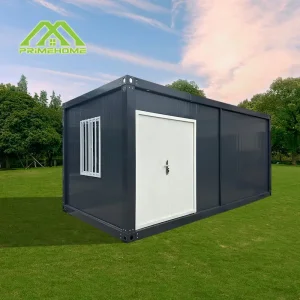
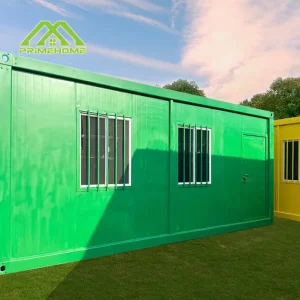
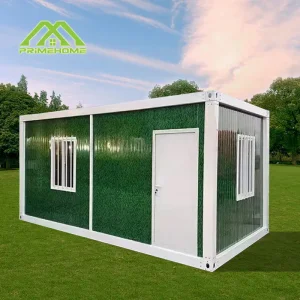
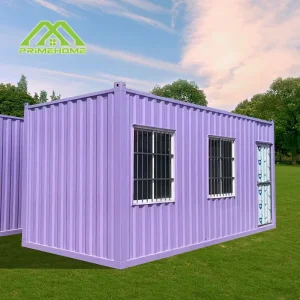
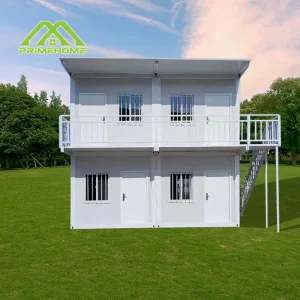
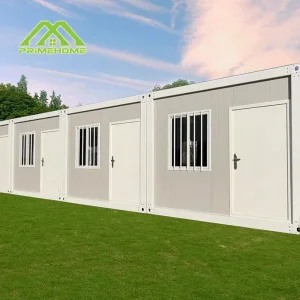
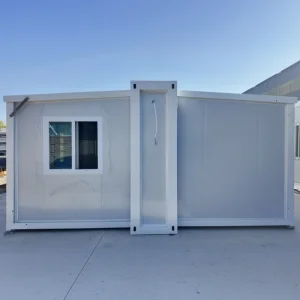
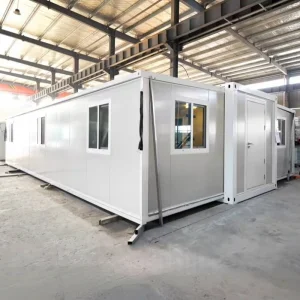
Complete Modular Product Fleet for Commercial & Residential Projects
Explore our complete range of stackable, expandable, and detachable modular flat-pack buildings factory-engineered in China.
Technical Expert Intelligence
Frequently Asked Questions: Importing & Deploying Container Houses in Houston
Direct responses from our engineering and export compliance team regarding Texas municipal codes, freight clearance, and assembly engineering:
How do China-manufactured flat pack container houses align with Houston Building Codes (IBC 2021 & ASCE 7-16)?
Our engineering team designs structural frame load calculations specifically tailored for North American wind load zones. Standard flat-pack units feature Q355B high-yield cold-formed steel framing capable of resisting basic wind speeds of 130–150 mph when anchored to approved pier or slab foundations. For project sites within Harris County or municipal City of Houston jurisdictions, we provide full structural CAD shop drawings, connection detail specifications, and structural calculation reports to assist your licensed Texas Professional Engineer (P.E.) in securing local building permits.
What ocean freight shipping routes and logistics protocols are used for delivery into Houston?
Cargo is routed directly from major Chinese ports (Ningbo-Zhoushan, Shanghai, or Qingdao) directly into the Port of Houston (Barbours Cut or Bayport Container Terminals). Flat pack units utilize standardized ISO dimensions where four (4) flat-packed 20ft units are stacked and interconnected to form the exact outer footprint of a single 20ft ISO ocean container, or packed in groups of four inside a 40ft High Cube container. Average transit time from factory gate to Houston Port ranges between 24 to 32 ocean days.
How do flat pack container houses withstand Houston’s high humidity and salt air corrosion?
All steel structural profiles undergo an industrial anti-corrosion treatment process: mechanical shot-blasting to SA 2.5 standards, followed by a hot-dip galvanizing layer (minimum 120g/m² zinc density), a zinc-rich epoxy primer, and a final marine-grade fluorocarbon polyurethane coat. This multi-stage barrier prevents oxidation and surface rusting despite constant coastal humidity, extended UV exposure, and salt spray ambient environments.
What on-site foundation preparation and crane capacity is required for fast assembly?
Flat pack units require minimal foundation work compared to traditional construction. They can be placed on concrete corner pads, strip footings, or a level concrete slab. Assembly requires basic lifting equipment (such as a 3-ton mobile crane, forklift, or overhead gantry hoist) to position the top roof frame while corner columns are bolted to the floor chassis. A trained crew of 4 workers can complete the structural erection, wall panel insertion, and weather-sealing of a standard 20ft module in under 3 hours.
Can interior electrical and plumbing systems be pre-configured for US 110V/220V standard utilities?
Yes. Factory production incorporates UL-certified wiring conduits, NEMA standard junction boxes, US-standard 110V/60Hz double-duplex outlets, and circuit breaker distribution panels. Plumbing lines for kitchens and bathrooms are factory pre-installed with standard PEX water supply lines and PVC waste drainage systems ready for rapid connection to municipal site utilities or temporary holding tanks.
What is the factory production lead-time for commercial volume procurement (50+ units)?
Our 28,000 m² Suzhou manufacturing facility maintains a monthly production capacity exceeding 5,000 modular units. For bulk orders ranging from 20 to 100 units, standard factory production cycles are completed within 14 to 21 business days following final engineering CAD drawing approval, ensuring quick turnaround for time-sensitive industrial projects.
Direct Factory Consultation
Ready to Optimize Your Houston Construction & Modular Project?
Connect directly with our senior structural engineering team for customized CAD layouts, wind-load structural calculations, and direct factory-gate FOB/CIF Port of Houston pricing.