
High-Performance Modular Sanitation & Living Units
Explore our precision-engineered rapid-deployment container modules, designed for seamless global transport and immediate plug-and-play installation.
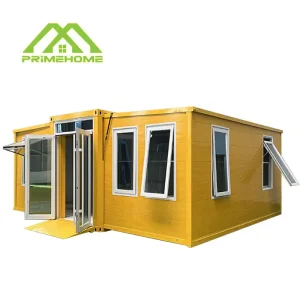
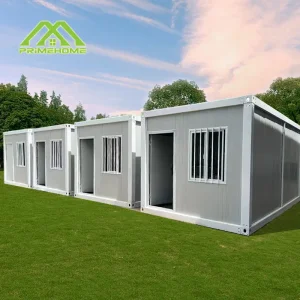
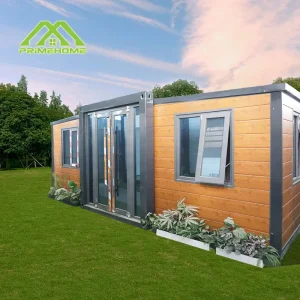
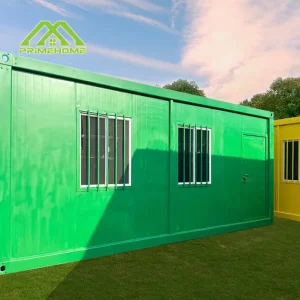
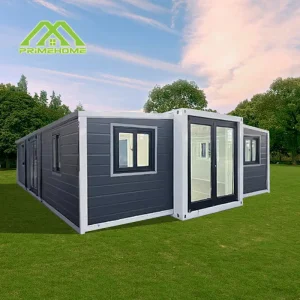
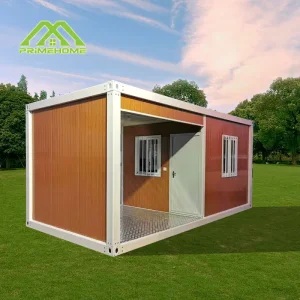
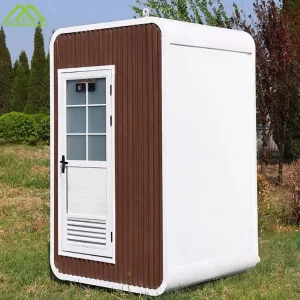
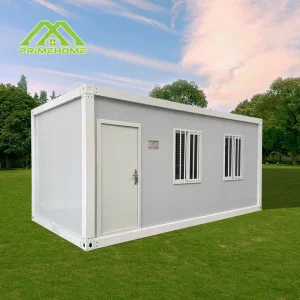
The Macro Evolution of Industrial Modular Sanitation
From fragile chemical cubicles to structural Corten-steel ISO sanitation facilities: Analyzing the technical revolution driving commercial off-site construction and public hygiene infrastructure.
Structural Integrity & Marine-Grade Longevity
Traditional temporary event restrooms rely heavily on rotational molded plastics or light-gauge aluminum frames, presenting severe structural limitations, low fire ratings, and accelerated degradation under heavy UV exposure. In contrast, modern wholesale shipping container toilets utilize standardized ISO corner castings, cold-formed galvanized profiles, and Corten-A weathering steel envelopes. This engineering standard guarantees wind resistance up to Class 12 typhoons (130+ km/h), seismic compliance up to Grade 8, and a minimum service lifespan of 25+ years even in harsh marine or mining environments.
Turnkey MEP Integration vs. Field Labor Bottlenecks
Mounting labor shortages and strict local safety regulations have escalated on-site construction costs exponentially across North America, Europe, and Australia. Industrial container toilets eliminate 85% of field labor by centralizing plumbing, electrical cabling, HVAC ducting, and water-proofing within factory conditions. Outfitted with factory-certified PEX water supply lines, heavy-gauge PVC/CPVC drainage manifolds, and integrated IP65-rated distribution panels, these containerized sanitary pods arrive on job sites 100% pre-commissioned, requiring only single-point hookups to water, sewer, and power grids.
Total Cost of Ownership (TCO) & ESG Optimization
For municipal authorities and Tier-1 civil general contractors, financial analysis reveals that shipping container toilet units provide a 42% lower Total Cost of Ownership across a 10-year asset cycle compared to brick-and-mortar facilities. Modules can be deployed, uncoupled, hoisted via crane, and relocated dozens of times without structural distortion. Concurrently, closed-loop water recirculation systems, dual-flush ceramic fixtures, and PIR insulation cores drastically curb Scope 1 and Scope 2 operational emissions, empowering EPC contractors to fulfill green building mandates (LEED & BREEAM).
B2B Sourcing Requirements Across Global Sectors
Detailed engineering frameworks customized to the rigorous functional constraints of commercial construction, extreme environments, civil emergency, and luxury hospitality.
Tier-1 Civil Construction & Infrastructure
Heavy construction sites require extreme durability, vandal-resistant surfaces, and high passenger turnover. PrimeHome fabricates heavy-duty 20ft and 40ft container toilet blocks equipped with grade 304 stainless steel fixtures, recessed piping, slip-resistant aluminum treadplate (checkered plate) or epoxy resin floors, continuous forced ventilation, and external utility maintenance manifolds that allow technicians to service waste traps without entering user cubicles.
Mining, Energy Camps & Remote Exploration
Remote oil fields, gas facilities, and mining concessions demand extreme climatic resilience. Our desert and arctic-spec container toilets incorporate 100mm high-density Rockwool or polyurethane (PIR) core wall panels, trace-heated plumbing circuits to prevent freezing at -40°C, high-capacity integrated macerator pumps, and self-contained blackwater holding tanks complete with ultrasonic level sensors and automated telemetric overflow alarms.
Eco-Resorts & Premium Glamping Hospitality
Luxury outdoor developments require high visual appeal and residential-grade comfort. Our Apple Cabin and Space Capsule hygiene series feature floor-to-ceiling panoramic insulated glazing, smart electrochromic privacy glass, backlit anti-fog mirrors, thermostatically controlled rain showers, wall-hung rimless ceramic toilets, premium acoustic insulation, and custom exterior cladding mimicking natural timber or architectural stone finishes.
Municipal Parks & Rapid Disaster Humanitarian Relief
Emergency response scenarios mandate plug-and-play humanitarian sanitation to avert waterborne epidemics. Our demountable flat pack and folding toilet units ship up to 6 units per standard 40ft High Cube container, assembling on site within 90 minutes. Units support multi-stall dual-gender allocations, solar-battery hybrid illumination, and fully accessible ADA/DDA ramps and handrails for elderly and disabled individuals.
Macro Industrial Solutions: Precision Structural & MEP Systems
A rigorous examination of our materials science, hydraulic circuit architecture, and structural load metrics setting international industry benchmarks.
| System Category | Industrial Standard Specification | Performance Metric / Engineering Advantage |
|---|---|---|
| Primary Steel Chassis | Q235B / Corten-A high-tensile structural steel; robotically welded cold-formed box profiles (thickness: 3.0mm–4.5mm). Electro-galvanized zinc dip + 2 coats epoxy primer + polyurethane topcoat (total dry film thickness > 120µm). | Yield strength ≥ 345 MPa. C4/C5 marine atmospheric corrosion classification according to ISO 12944-6. Deflection resistance under full 8-high vertical stacking loads. |
| Thermal Envelope | Sandwich panels with exterior color-coated 0.5mm steel skins. Core options: Class A non-combustible Rockwool (120 kg/m³ density) or rigid Polyisocyanurate (PIR) foam with B1 fire retardancy. | Thermal conductivity ≤ 0.022 W/m·K (PIR). R-value performance ranging from R-15 to R-32, enabling HVAC power load reductions exceeding 35% in extreme environments. |
| Hydraulic Distribution (MEP) | PEX-A cross-linked polyethylene pipe networks or DIN-standard PPR fusion-welded lines. Concealed chase manifold layout with dedicated quarter-turn isolating ball valves for each sanitary fixture. | Operating pressure rated to 10 Bar (1.0 MPa). Resistance to chemical sanitizers, scale accumulation, and acoustic water hammer shock. Zero concealed joint failure design. |
| Waste & Drainage Engineering | Heavy-schedule PVC-U or HDPE electrofusion soil pipes sloped at optimal 1:50 gradients. Multi-point atmospheric venting stacks fitted with one-way anti-siphon air admittance valves (AAV). | Guaranteed sewer gas hermetic seal (> 500 Pa positive pressure). Optional heavy-duty 1.5 kW cutting macerator pumps with stainless steel rotary blades discharging through a 50mm conduit over 100m. |
| Electrical & Life Safety | Concealed halogen-free fire-resistant cabling running within rigid metal conduits. Modular IP65 distribution board with Residual Current Device (RCD/GFCI, 30mA trip threshold). | Full compliance with IEC 60364, AS/NZS 3000, and NEC Article 545. Integrated LED luminaires with occupancy PIR motion sensors reducing idle energy draw by 70%. |
| Subfloor & Waterproofing | 18mm–22mm high-density fiber cement board (Class 0 fire rated, impervious to rot/termites) over steel joists, encapsulated by seamless hot-air welded 2.0mm commercial vinyl or 3.0mm aluminum diamond tread. | Point load capacity > 4.5 kN/m²; uniform floor loading > 7.5 kN/m². 100mm perimeter coving preventing water infiltration behind walls during pressure-wash sanitize routines. |
Localized Engineering Compliance & Global Certifications
Overcoming cross-border regulatory hurdles. Our prefabricated sanitary modules are engineered to meet or exceed jurisdictional building, electrical, and plumbing standards.
North America (US & Canada)
Engineered for full alignment with the Uniform Plumbing Code (UPC), International Plumbing Code (IPC), and NFPA 70 (National Electrical Code). Modules incorporate WaterSense-certified ultra-low-flow ceramic toilets (1.28 GPF / 4.8 LPF), ADA-compliant 60-inch wheelchair turning radii, grab rails with 250-lb load ratings, and Canadian CSA C22.1 electrical sub-assemblies validated for harsh sub-zero conditions.
European Union & United Kingdom
Certified in compliance with the EU Construction Products Regulation (CPR 305/2011/EU) carrying CE marking under EN 1090-1 execution class EXC2 for structural steel. Plumbing manifolds align with EN 12056 gravity drainage frameworks and BS 8300 / Part M building accessibility mandates. Electrical equipment holds CE, RoHS, and low-voltage directive compliance with IP65 moisture-barrier sealing.
Australia & New Zealand (ANZ)
Engineered specifically to satisfy the stringent requirements of AS/NZS 3500 (Plumbing and Drainage) utilizing WaterMark certified fittings, taps, and cisterns. Wiring conforms to AS/NZS 3000 wiring rules with RCM-marked components. Cyclonic wind region tie-down engineering packages (Region C & D compliance) are custom integrated for remote Pilbara and Queensland resource hubs.
Technology Roadmap & Future Outlook (2025–2035)
Pioneering the convergence of autonomous IoT facility management, zero-emission off-grid sanitization, and circular architectural modularity.
AIoT-Driven Predictive Hygiene Management
Our upcoming product generations incorporate industrial LoRaWAN and 5G-connected telemetry modules directly into each sanitary container block. Arrays of non-invasive sensors continuously record cubicle footfall, consumables levels (liquid soap, paper, water consumption), odor thresholds via volatile organic compound (VOC) sniffer chips, and pipe leak micro-vibrations. Predictive maintenance protocols alert facility operators to blockages or supply depletion before system service disruption occurs.
Net-Zero Energy & Off-Grid Water Circularity
Addressing sites devoid of municipal sewer and grid connection, our advanced research unit is delivering self-sustaining closed-loop shipping container restrooms. These units integrate high-efficiency mono-crystalline rooftop photovoltaic cells with LiFePO4 battery storage, solar thermal hot water arrays, vacuum flush mechanisms consuming just 0.8L per flush, and self-contained aerobic bioreactor tanks that treat blackwater to discharge-safe irrigation standards on site.
Automated UV-C Cleansing & Touchless Architecture
In response to evolving international public hygiene standards, our advanced engineering units feature complete hands-free interaction: radar-triggered doors, sensor-activated taps, automated chemical wash nozzles, and high-frequency germicidal UV-C light fixtures. When presence sensors confirm an empty compartment, a 90-second rapid UV-C cycle neutralizes 99.9% of surface and airborne pathogens, ensuring hospital-grade sanitation in public realms.
Frequently Asked Questions: Technical Procurement & Logistics
In-depth engineering answers to the most common queries raised by procurement directors, civil structural engineers, and international project managers.
What are the exact logistics dimensions, shipping modes, and site crane-lifting requirements?
How does the unit interface with existing site sewage networks, septic systems, or zero-utility sites?
What anti-corrosion and water-containment techniques are employed to guarantee a 25-year service life?
Can internal stall layouts, fixture allocations, and universal ADA/DDA accessibility be customized?
What are the lead times, manufacturing capacities, and quality verification protocols for bulk orders?
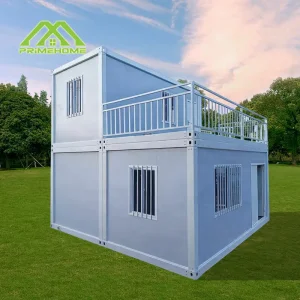
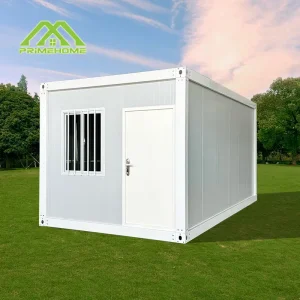
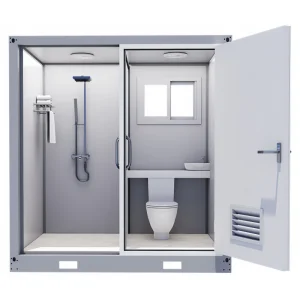
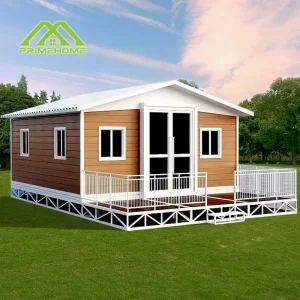
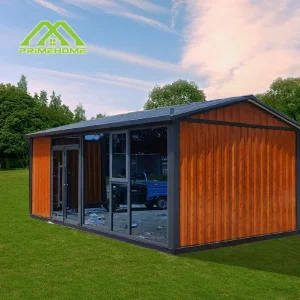
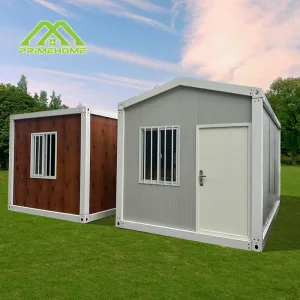
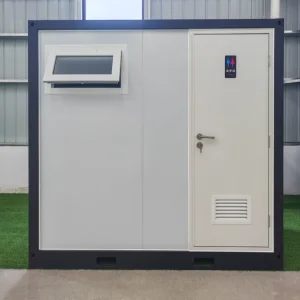
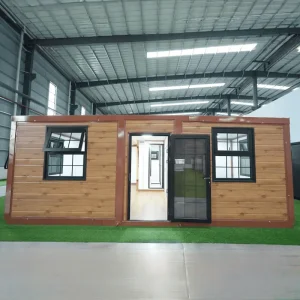
Customizable Prefab Living Pods & Restroom Compounds
Explore our extended series of prefabricated housing, flat pack container structures, and dedicated wet-dry separation hygiene blocks ready for worldwide delivery.
Suzhou PrimeHome Technology: Precision Engineering at Scale
Operating a modernized 28,000 square meter intelligent production complex in Suzhou, China, powering infrastructure programs across 15+ countries.
Full-Chain In-House Production
Unlike trading intermediaries, Suzhou PrimeHome Technology operates completely vertical manufacturing: from laser plate cutting, automated robotic frame welding, and automated powder coating ovens to cleanroom sanitary fitting installation and computerized testing. This end-to-end oversight guarantees consistent structural accuracy (±1.5mm tolerance) across multi-hundred-unit volume contracts.
Rapid Turnaround & High-Volume Stability
Backed by an extensive warehouse of standardized galvanized profiles, insulated sandwich panels, and pre-tested electrical assemblies, PrimeHome produces up to 5,000 modular housing and container toilet pods every month. Whether deploying sudden emergency relief shelters or staging phases for 2,000-man mining accommodation camps, our project schedules remain immune to supply disruptions.
Dedicated International Project Engineering
Our bilingual senior engineering team communicates directly in English with your architectural and site execution personnel. We provide full BIM models, CAD foundation layout drawings, plumbing schematic schematics, structural calculation sheets, and customized export packing manifests, ensuring that your container units integrate effortlessly with your local building inspectors and site infrastructure.