
Primary Engineered Inventory
Featured Industrial Modular & Expandable Container Units
Direct-from-factory modular configurations, re-engineered ISO Corten chassis, and rapid-deployment expandable pods verified for structural load, moisture resistance, and turnkey utility.
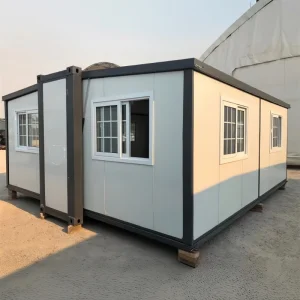
China Quick Install Prefabricated Tiny House F700 Expandable Container House Modern Glamping Cabin for Scenic Resort and Homestay Supplier, Factories
View Specifications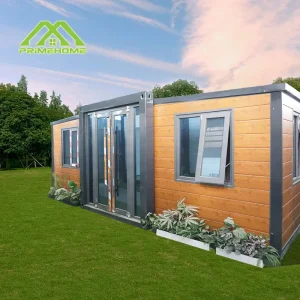
Custom Customized 20ft 40ft expandable container house High-quality modern luxury villa Collapsible container house Manufacturer, Supplier
View Specifications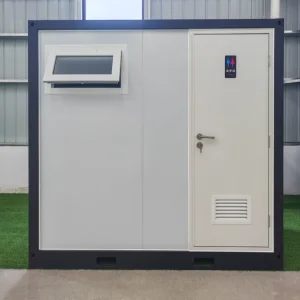
High-Quality Movable Reusable Prefab Dry Wet Separation Shower Bathroom Modular Portable Restroom With Glass Partition Supplier, Factory
View Specifications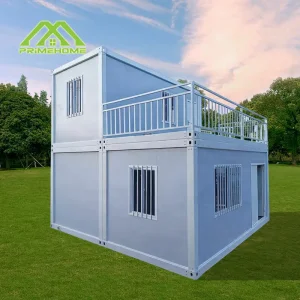
Custom Affordable prefabricated mini houses Demountable flat pack container housing Rapid deployment Supplier, Factory
View Specifications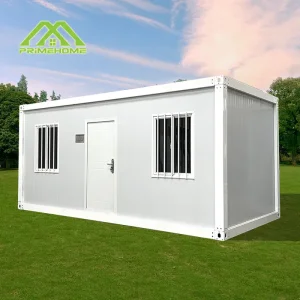
China Hot-selling custom-designed mobile flat-pack container houses Manufacturer, Supplier
View Specifications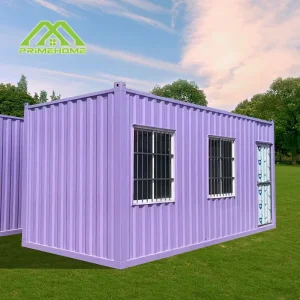
China 20ft 40ft stackable foldable modern flat pack container homes Direct-factory sales Low shipping costs Flexible FOB term Supplier, Suppliers
View Specifications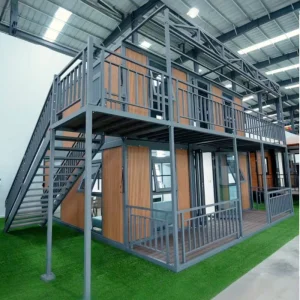
High-Quality Modern Double Story Modular Villa Prefab Expandable Container House with Complete Living and Outdoor Leisure Space Manufacturer, Factories
View Specifications
Industrial Procurement Intelligence
The Engineering Economics of Second-Hand & Repurposed Container Buildings
Why international EPC contractors, mining consortiums, and resort operators are shifting from standard builds to secondary Corten steel structural retrofitting.
In global off-site construction (OSC), the procurement of wholesale second-hand container houses represents a decisive convergence of mechanical durability, circular economic compliance, and capital efficiency. Standard intermodal freight containers—constructed under ISO 668 and ISO 1496/1 specifications—rely predominantly on SPA-H Corten atmospheric corrosion-resistant steel. When ocean freight carriers retire these hulls after 8 to 12 years of intermodal transit, the underlying structural cage retains over 85% to 92% of its baseline yield and tensile capability.
However, raw second-hand containers procured "as-is" from shipping depots pose severe structural risks if deployed without industrial-grade factory refurbishing. Commercial viability requires a certified remanufacturing partner capable of evaluating localized shear stress, decontaminating internal wood flooring from legacy pesticide treatments, abrasive-blasting oxidization down to SA 2.5 standards, and re-engineering perimeter openings with cold-formed steel box headers. Suzhou PrimeHome Technology Co., Ltd. bridges the gap between crude secondary containers and turn-key, building-code-compliant architectural modules.
Supply Chain Supremacy
Why Sourcing Second-Hand & Modular Containers from China Outperforms Regional Depots
Analyzing the metallurgical advantages, automated secondary fabrication lines, and direct cost-per-square-meter benefits delivered by Chinese industrial ecosystems.
Port Cluster Inventory Liquidity
China operates 7 of the world's 10 busiest container ports. This grants PrimeHome immediate access to massive depot streams of Cargo Worthy (CW) and Wind & Water Tight (WWT) chassis at wholesale baseline pricing impossible to replicate in non-hub economies.
Robotic Re-Engineering & Plasma CNC
Rather than manual torch cutting on site, our Suzhou plant uses 3D automated CNC plasma cutting beds to mill structural apertures. All perimeter door and window openings receive robotic MIG welded sub-frames that restore original moments of inertia.
Epoxy-Zinc Thermal Blasting
Second-hand maritime skins endure salt-fog deterioration. Our factory environment uses automatic shot-blasting to strip oxidized paint layers down to bare metal, applying two coats of two-component zinc-rich primer and C5-M marine polyurethane topcoats.
Turnkey MEP Integration (CE/UL)
China’s deep industrial supply chain allows complete pre-installation of plumbing, dry-wet separated sanitary units, integrated HVAC ducting, and electrical systems adhering to AS/NZS 3000, NEC (NFPA 70), or European CE standards prior to ocean export.
Lead Time Compression & Scale
A single foreign contractor retrofitting 50 used containers on-site faces months of labor delays. PrimeHome processes, insulates, finishes, and tests 500+ container units monthly, ensuring mega-camps and commercial developments ship on tight project schedules.
Single-Point Engineering Liability
By bypassing independent brokers, weld shops, and interior fitters, clients receive structural FEA calculation reports, water-tightness certifications, and complete architectural documentation from a single accountable entity.
Macro Environmental & Tech Trends
Decarbonization, Embodied Carbon & The Future of Modular Infrastructure
How second-hand steel structural repurposing aligns with global Net-Zero mandates, Scope 3 emission targets, and automated industrialization.
Circularity & Carbon Abatement
Repurposing a single 40ft High Cube container conserves approximately 3.5 metric tons of virgin steel, directly preventing up to 8.2 tons of upstream CO2 emissions associated with blast furnace smelting. Enterprise developers leverage these figures for LEED and BREEAM certifications.
High-Performance Thermal Envelopes
Historical criticisms of container housing centered on thermal bridging. Modern remanufacturing incorporates external continuous insulation (CI), closed-cell polyurethane (PUR/PIR) spray-applied cores, and aerogel thermal breaks, easily hitting passive U-values below 0.18 W/m²K.
Plug-and-Play Smart Building Systems
Factory-retrofitted units are increasingly embedded with BMS (Building Management Systems), automated climate controls, dimmable architectural glazing, and modular rooftop photovoltaic (PV) solar racking for fully grid-independent remote operation.
Engineering Evaluation
Technical Specification Matrix: Second-Hand Structural Conversion vs. Prefabricated Systems
A clear data-driven benchmark to assist structural engineers and procurement directors in selecting the optimal modular system for their specific application.
| Performance / Spec Metric | Refurbished 2nd-Hand ISO Container | Expandable Modular System | Flat-Pack / Detachable Prefab |
|---|---|---|---|
| Primary Structural Steel | SPA-H Corten Steel (1.6mm - 2.0mm Corrugated) | Q235/Q355 Galvanized Structural Hollow Sections | Cold-Formed Galvanized Steel Profiles (2.5mm - 3.5mm) |
| Stacking Load Capacity | Up to 6-8 Storeys (Full Corner Post Integrity) | 1-2 Storeys Maximum (Lightweight Frame) | Up to 3 Storeys (Engineered Bolted Columns) |
| Ocean Freight Optimization | Standard CSC SOC (Shipper Owned Container) | Ships Folded (1 Unit Per 40ft HQ or Flat Rack) | Bundled Packaging (4 Units Packed into 1 ISO Footprint) |
| Structural Lifespan | 25 to 40+ Years (Treated Anti-Corrosion) | 15 to 25 Years (Controlled Environment) | 15 to 20 Years (Temporary / Relocatable) |
| Thermal Core Insulation | Spray PUR, PIR Boards, Rockwool (50-100mm) | 50mm/75mm EPS or PU Sandwich Panels | 50mm - 100mm Rockwool / Glasswool Panels |
| On-Site Assembly Velocity | Instant (Crane onto Pad, Connect Utilities) | 15 to 30 Minutes (Mechanical Unfolding) | 2 to 4 Hours (Manual Crew Bolted Assembly) |
| Best Application Field | Offshore Rigs, Mining Camps, Secure Infill | Scenic Glamping, Eco-Resorts, Granny Flats | Mass Worker Housing, Disaster Relief, Site Offices |
Turn-Key Deployment Sectors
High-Impact Civil Engineering & Commercial Use Cases
Engineered solutions deployed across extreme climates, remote geographies, and fast-moving urban infrastructure landscapes.
Remote Resource Extraction & Mining Camps
From the arid Pilbara in Western Australia to the high-altitude Andes, resource operations require cyclone-rated, dust-sealed, and rapidly relocatable accommodation. Factory-refurbished Corten containers provide vandal-proof structural safety, integrated firewalls, and comfortable sleep-quarters for workforce wellbeing.
Eco-Resorts & Scenic Homestay Hospitality
Protected nature reserves, coastal cliffs, and forest resorts prohibit conventional wet-construction foundations. Modular apple cabins, luxury space capsules, and retrofitted panoramic container suites install on minimal ground-screw footings without destabilizing local ecologies, achieving immediate revenue generation.
Disaster Relief & Emergency Medical Shelters
When humanitarian crises strike, standard construction lead times fail vulnerable populations. Foldable and flat-pack container housings ship by the hundreds within 48 hours, providing insulated triage hospitals, negative-pressure clinics, and hygienic sanitary blocks with pre-installed plumbing.
Urban Infill & Commercial Pop-Up Plazas
Vacant metropolitan real estate can be activated within days using multi-story modular container cafes, boutique retail pop-ups, and co-working spaces. Stackable ISO-based modules simplify municipal permitting and can be dismantled, trucked, and restacked when land leases expire.
Procurement Risk Management
Global Quality Control, Inspections & International Standards
How PrimeHome eliminates import risks for enterprise buyers through certified non-destructive testing, code compliance, and export documentation.
Purchasing second-hand container buildings across international borders introduces severe compliance pitfalls if structural verification is not systematized. PrimeHome enforces an exhaustive 5-Stage Factory QA Protocol across every refurbished and manufactured chassis prior to bill-of-lading issuance:
1. Ultrasonic Thickness & Shear Testing: Second-hand Corten container corners, floor crossmembers, and top rails are ultrasonically scanned to guarantee steel gauge thicknesses satisfy safety margins. Any member exhibiting localized pitting or cross-sectional loss greater than 8% is excised and replaced with certified Q355 structural steel.
2. Chemical & Fumigation Remediation: Original maritime container floors are treated during manufacturing with heavy-duty pesticides (e.g., Radaleum, Dieldrin). Our factory strips or fully encapsulates original floorings with non-toxic, food-grade epoxy barriers or replaces them entirely with marine fiber-cement board.
3. Air-Tightness & Hydraulic Hose Chamber Testing: All retrofitted apertures, gasketed doors, and expandable joints are subjected to high-pressure continuous hydraulic drenching (simulating severe torrential downpours at 200 kPa) to confirm zero seal breach before interior trim installation.
4. Electrical & Mechanical Code Compliance: Internal cabling, circuit breakers, and RCD protection devices are configured directly to match the grid frequency, voltage, and grounding topologies of the destination market (including 110V 60Hz split-phase for North America, 230V 50Hz for Europe/Australasia).
Technical Clarifications
Wholesale Procurement & Engineering Q&A
Authoritative responses to common engineering, logistical, and commercial inquiries from overseas developers and importers.
How does cutting large window and door apertures affect container structural integrity?
ISO shipping containers depend on their corrugated Corten sidewalls for shear strength. Cutting openings without engineering reinforcement causes roof sagging and racking deflection. PrimeHome integrates welded structural rectangular hollow sections (RHS) around every aperture, restoring structural load transfer directly to the corner posts.
What is the difference between Cargo Worthy (CW) and As-Is second-hand containers?
"Cargo Worthy" (CW) signifies that the container frame satisfies international marine shipping safety standards (CSC certified) and can withstand heavy sea transport stacking loads. "As-Is" containers are retired hulls that often feature severe corrosion, structural racking, or floor rot. PrimeHome strictly selects CW-grade units for architectural conversions.
How are finished container houses transported overseas without incurring exorbitant freight rates?
Finished ISO-standard converted houses travel as SOCs (Shipper Owned Containers) with valid CSC safety inspection plates, meaning they are loaded directly into standard container ship slots without breakbulk fees. For flat-pack and expandable systems, multiple modules pack into single 40ft HQ volumes, reducing ocean freight overhead by up to 75%.
What insulation strategies prevent interior condensation ("container rain")?
Condensation occurs when warm interior moisture hits the cold bare steel envelope. PrimeHome mitigates thermal bridging using continuous closed-cell polyurethane (PUR) spray foam or vacuum-insulated panels (VIP) coupled with breathable vapor-barrier membranes. This seals the interior cavity from temperature differential condensation.
Can second-hand container houses meet local building permit requirements in the US, EU, and Australia?
Yes. We supply comprehensive structural engineering documentation, Finite Element Analysis (FEA) reports, electrical compliance documentation (UL/CE), and fire performance ratings (Class A/B1 non-combustible sandwich cores). Our in-house engineering team collaborates directly with clients' local architects to ensure smooth permit clearances.
Specialized Heavy-Duty Portfolio
Engineered Modular Offices, Camping Cabins & Sanitary Pods
Explore our full-spectrum catalog of factory-prefabricated modular buildings, camping pods, soundproof multi-bedroom villas, and specialized sanitary modules.
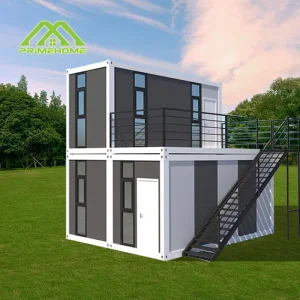
Wholesale High quality 10 foot 20 foot three bedroom layout garden modular office container homes Manufacturer, Manufacturers
View Specifications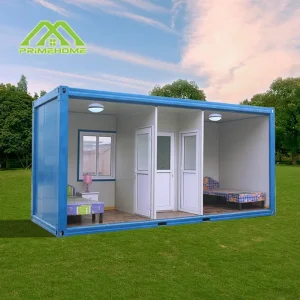
Wholesale 40 Foot Luxury Modular Container House Removable Prefabricated Steel Camping Cabin Quick Installation and Ready to Move In Manufacturers, Suppliers
View Specifications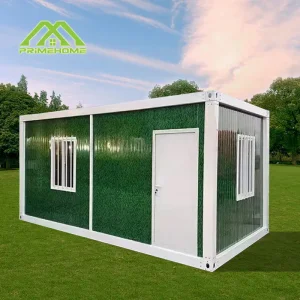
China 10ft 20ft 30ft 40ft custom house Steel metal structure Portable and detachable flat pack container house Factory, Factories
View Specifications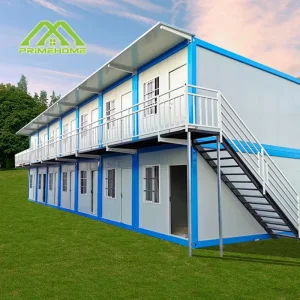
Custom Modular 20 40 foot Prefabricated container houses Plug-and-play Affordable and practical Manufacturer, Suppliers
View Specifications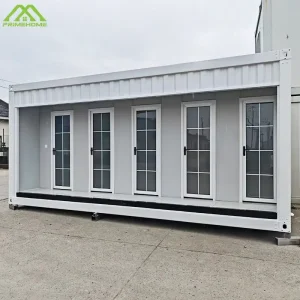
Custom Customized high-quality portable container toilets Prefabricated bathroom shower containers Supplier, Factories
View Specifications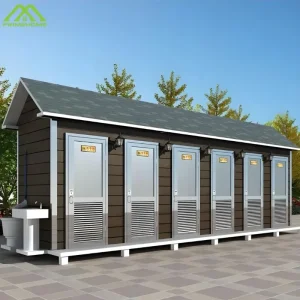
Wholesale Wholesale high quality mobile toilets Luxury outdoor bathroom WC container toilets Manufacturers, Factories
View Specifications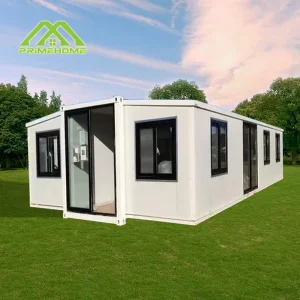
Custom 3 in 1 double-wing foldable container house Soundproof and sustainable Expandable ultimate luxury villa apartment Supplier, Factory
View Specifications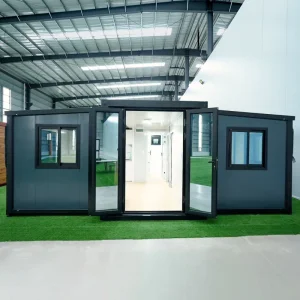
Custom 20FT Double Wing Factory Prefabrication Expandable Container House with Full Functional Layout Manufacturer, Supplier
View SpecificationsInitiate Your Industrial Modular Container Procurement
Connect directly with PrimeHome's structural engineering and export division. Receive customized architectural drawings, FEA calculations, and FOB/CIF commercial proposals within 24 hours.