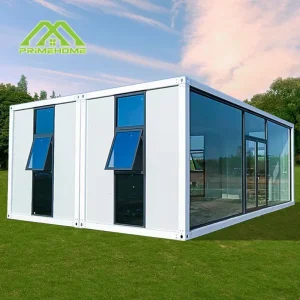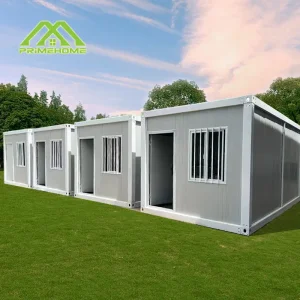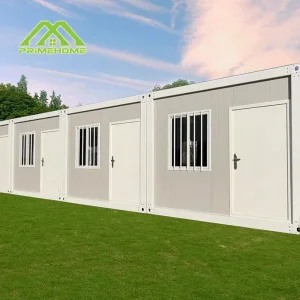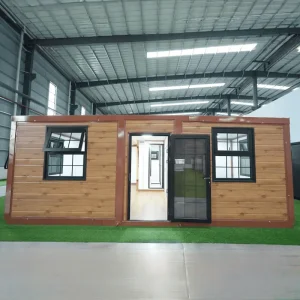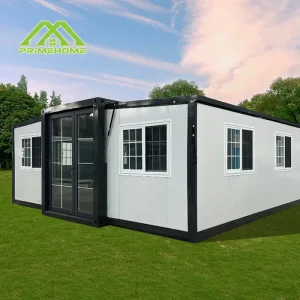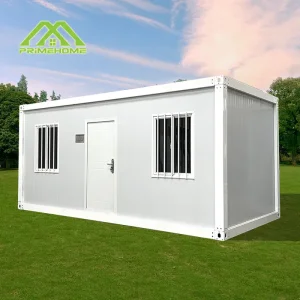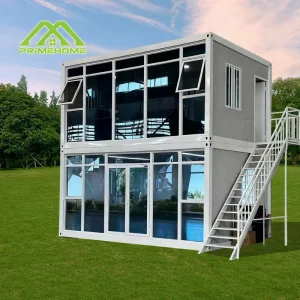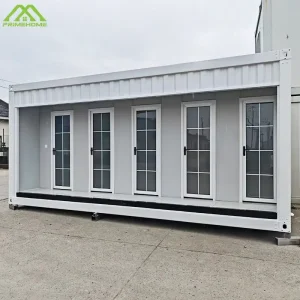
Engineered Prefabricated Living & Sanitary Infrastructure
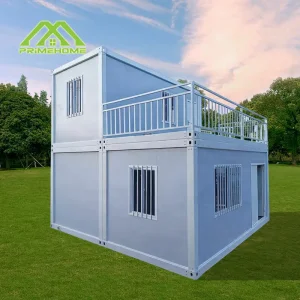
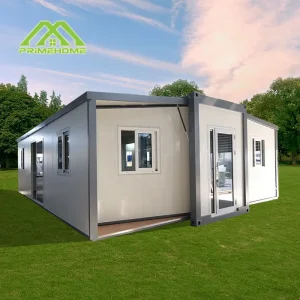
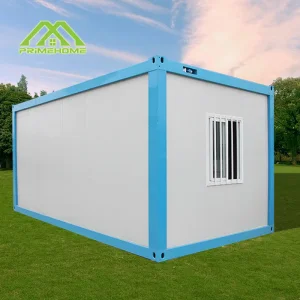
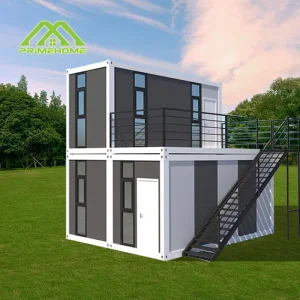
Explore precision-fabricated, rapid-deployment container housing and readymade washroom installations engineered directly from our specialized manufacturing base.
The Global Shift Toward Volumetric Prefabricated Bathrooms
Traditional wet-trade construction is rapidly being replaced by precision-engineered bathroom pods (PBU/POD systems). Explore the macro-economic forces propelling this paradigm shift.
In modern commercial construction and civil contracting, the bathroom represents less than 10% of a building’s gross floor area, yet accounts for more than 35% of total warranty claims, site delays, and subcontractor trade clashes. The confluence of tiling, waterproofing, mechanical venting, pressurized plumbing, sanitary ware mounting, and electrical grounding makes traditional on-site washroom construction a bottleneck for developers worldwide.
As tier-one EPC contractors, commercial hospitality chains, worker camp developers, and public municipal bodies confront severe trade shortages and escalating labor rates, Readymade Bathroom and Toilet Pods have migrated from an alternative construction technique to a baseline specification. Produced within ISO-controlled factory cleanrooms, these turnkey sanitary modules are structurally isolated, pressurized, hydraulically tested, and certified before dispatch.
Information Gain Metric: Offsite volumetric sanitary pods shrink project turnaround times by 40% to 60%, eliminate up to 90% of on-site punch-list defects, and reduce construction waste by 75% compared to cast-in-place wet construction methods.
Severe Trade Clashing Solved
Traditional bathrooms require up to 8 distinct sub-trades (masons, plumbers, waterproofers, tile layers, electricians, joiners, painters, and glass fitters). Readymade bathroom pods combine all 8 disciplines in one unified assembly line, eliminating scheduling delays.
Monolithic Leakproofing
Water infiltration represents the primary structural risk in high-density developments. Factory-made pods leverage one-piece thermoformed SMC (Sheet Molding Compound) bases or robotic hot-welded stainless trays, ensuring 100% monolithic waterproofing.
Comprehensive Code Compliance
Global export demands rigorous compliance: CE marking for European markets, WaterMark and AS/NZS 3500 for Oceania, and UPC / IPC plumbing codes across North America. Leading Chinese manufacturing clusters engineer modular systems to these criteria from CAD stage.
Engineering Audit: Readymade Pods vs. Cast-In-Place Bathrooms
A granular side-by-side technical evaluation across critical construction milestones, structural performance, and lifecycle financial metrics.
| Evaluation Parameter | Factory Readymade Bathroom Pod | Traditional Cast-in-Place On-Site Build | Strategic Advantage |
|---|---|---|---|
| Installation Velocity | 15 to 30 minutes per unit (crane lift & slide) | 14 to 28 days across multiple trade schedules | 92% Faster Turnaround |
| Waterproofing Reliability | Factory hydraulic pressure testing (24hr static hold) | Variable hand-applied liquid membrane prone to puncture | Zero Leak Defect Guarantee |
| Labor Allocation | Offsite manufacturing; 2 utility fitters on site | 8 separate specialized trades coordinating in cramped space | 85% Labor Reduction |
| Structural Dead Load | Ultralight composite or light steel (200 - 450 kg) | Heavy concrete, sand bed, and wet mortar (1,200 - 2,200 kg) | 65% Weight Reduction |
| Material Wastage | Under 1.5% due to CNC and precision bulk cutting | 12% - 20% on-site cut-off, breakage, and grout loss | Circular ESG Compliance |
| Acoustic Isolation (STC) | Decoupled dual-perimeter walls (STC 48 - 56 dB) | Monolithic acoustic bridge through slab masonry (STC 38 - 42 dB) | Superior Privacy |
Engineered Use-Cases Across Diverse Global Environments
From hyper-arid desert mining camps to luxury mountain eco-resorts, readymade container washrooms and modular pods offer plug-and-play adaptability.
High-Density Hospitality & Eco-Resorts
Boutique hotels, apple cabin resorts, and luxury glamping sites deploy fully furnished pods complete with smart mirrors, thermostatic shower towers, and panoramic insulated glazing. Arriving 100% turnkey, they allow resort operators to generate cash flow months earlier than conventional construction allows.
Remote Industrial & Worker Camps
Mining operations, oil & gas installations, and infrastructure work camps require rugged, hygienic sanitary blocks. Heavy-duty 20ft and 40ft container toilets feature commercial-grade stainless steel fixtures, industrial-grade macerator pumps, and high-throughput mechanical ventilation systems designed for 24/7 continuous worker rotation.
Municipal Public Infrastructure & Parks
Modern smart cities leverage vandal-resistant, exterior-clad sanitary cabins for civic squares, parks, transport terminals, and seaside promenades. Integrated with smart access control, greywater re-circulation, and automatic wash cycles, these readymade units drastically reduce municipal maintenance overheads.
Emergency Humanitarian & Disaster Relief
Following natural disasters or humanitarian displacement, maintaining clinical sanitation is the first barrier against waterborne epidemics. Flat-pack and collapsible container toilet units can be air-lifted or trucked in dense multiples, assembling in under 30 minutes on compacted gravel without complex foundation works.
Healthcare & Isolation Ward Expansion
Hospitals facing sudden surges or undertaking ward renovations utilize prefabricated antimicrobial pods. Engineered with negative-pressure venting, non-porous antibacterial gel-coat walls, hands-free infrared sanitary ware, and dedicated medical-grade waste discharge connections.
Urban Micro-Apartments & BTR (Build-to-Rent)
Urban housing density requires maximizing every square millimeter. Compact readymade pods integrate multi-functional storage, concealed cisterns, folding vanities, and high-efficiency heat-recovery ducting to deliver a full four-fixture luxury experience within an ultra-lean 3.2m² footprint.
Manufacturing Standards: The Anatomy of a High-Performance Sanitary Pod
True durability begins in structural mechanics, thermal separation, and metallurgic treatment. Review the structural integrity breakdown engineered by Suzhou PrimeHome.
1. Hot-Dip Galvanized Structural Enclosure
Every readymade bathroom pod and mobile toilet unit is anchored on a precision cold-formed steel perimeter chassis. Following laser cut and robotic welding, structural members undergo high-specification hot-dip galvanization (minimum coating 275 g/m²). This creates total chemical passivation against condensation, salt mist, and urine aerosol exposure, extending service life beyond 25 years.
2. Monolithic Base Pan Waterproofing
Traditional wet floors fail at cold joints. Our industrial manufacturing line utilizes either Compression-Molded SMC (Sheet Molding Compound) or custom marine-grade 304/316 stainless steel pressed trays. Both variations feature an integral perimeter upstand of 100mm to 150mm, completely enclosing the wet zone in a seamless basin with pre-engineered drainage gradients.
3. Factory Pre-Plumbed & Electrically Tested
All supply lines utilize cross-linked PEX-a or multilayer composite tubing with press-fit DZR brass couplings, completely eliminating field soldering. Drain networks incorporate anti-siphon soil pipes and solvent-welded UPVC fittings. Electrical conduits are low-smoke halogen-free (LSZH), certified with IP65 moisture sealing in critical splash sectors.
4. Acoustic Decoupling & Vibration Damping
Noise transmission in modular hotels and multi-unit living spaces can compromise occupant satisfaction. Pod perimeter walls utilize viscoelastic damping pads and rock wool insulation (density > 60 kg/m³). This breaks direct contact with the primary building structure, dampening flushing acoustics down to under 32 dBA in adjacent rooms.
5. The E-E-A-T Vendor Qualification Checklist
For international buyers evaluating Chinese modular factories, verification of operational experience and quality control rigor is non-negotiable. PrimeHome’s 28,000 m² Suzhou manufacturing facility operates under the following transparent audit framework:
- Factory Direct Ownership: Dedicated production lines rather than outsourced trading brokerages.
- BIM to CNC Automation: Direct CAD/CAM integration preventing manual measurement errors on framing.
- Hydrostatic Testing Log: Every unit pressure-tested at 1.0 MPa for 24 hours prior to container stuffing.
- Third-Party Material Traceability: Mill test certificates for structural steel and CE/UL/WaterMark ratings for plumbing/electrical components.
Technology Roadmap: The Next Frontier in Prefab Washroom Systems
How the integration of computational BIM, IoT monitoring, and closed-loop circular systems is redefining off-site manufacturing.
Sanitary pods are engineered directly within Revit and Navisworks, incorporating MEP clearances down to the millimeter. Structural frames are cut via automated CNC fiber lasers, eliminating field clashes and ensuring seamless integration with main building structural grids.
Public container toilets and commercial pods feature telemetry sensors tracking consumables, water flow anomalies, air quality (VOC/NH3 levels), and occupancy loads. Facilities management teams receive real-time alerts before leak damages or service disruptions occur.
Self-sustaining container toilets equipped with micro-membrane bioreactors (MBR) and solar-thermal sanitization. Shower and wash basin greywater is polished on-site for toilet flushing, cutting fresh water consumption by up to 60% in remote and ecologically protected terrain.
Engineering FAQ for Global Project Directors & Buyers
Straightforward answers addressing design limitations, logistics packing, international standards compliance, and on-site hookups.
What is the fundamental structural difference between an SMC composite pod and a steel-framed tiled pod?
SMC (Sheet Molding Compound) pods use high-pressure hydraulic presses to mold aerospace-grade composite resin into high-durability floor, wall, and ceiling components. They are ultra-lightweight (approx. 200–250 kg), completely non-porous, and ideal for worker dormitories, hospitals, and marine environments. Steel-framed pods utilize cold-formed galvanized studs with fiber cement boarding, permitting genuine ceramic tile, marble, or micro-cement finishes. Steel-framed pods offer luxury aesthetics identical to traditional builds, though with slightly higher dead weight (350–500 kg).
How do factory readymade bathrooms connect to local on-site utilities?
Every pod is engineered on a "plug-and-play" paradigm. All cold and hot water inlets terminate at a single external recessed manifold (typically 1/2" or 3/4" BSP/NPT male connection). The waste outlet terminates in an accessible external stub (typically 110mm / 4" diameter). Electrical circuits lead to an integrated distribution box or terminal chase with quick-connect wagos. Connecting a unit on-site typically requires only two utility fitters working for under 45 minutes.
Can your readymade bathroom and toilet pods comply with specific regional codes (e.g., US UPC, Australian WaterMark, UK WRAS)?
Yes. Because we engineer all systems in-house at our Suzhou facility, we regularly configure components according to client-specified destination codes. We supply WaterMark-certified valves and sanitary ware for Australia/New Zealand, WRAS-approved fittings for the United Kingdom, and UPC/CSA-certified components for the USA and Canada. Electrical harnesses can be configured for 110V/60Hz or 230V/50Hz with market-specific RCD/GFCI safety switches.
How are finished bathroom pods packaged to prevent damage during transoceanic shipping?
Finished volumetric pods are wrapped in heavy-gauge VCI (Vapor Corrosion Inhibitor) heat-shrink plastic film with silica desiccant bags placed inside to prevent moisture buildup. Critical internal elements (toilets, mirrors, glass partitions) are reinforced with custom foam blocks and strapped to structural framing points. Depending on dimensions, pods are nested within High Cube 40ft shipping containers or built directly into ISO corner-casting containerized envelopes for direct breakbulk sea freight handling.
What is the minimum order quantity (MOQ) and standard factory production lead time?
For standard catalogue container toilets and prefabricated washroom cabins, our MOQ is 2 to 4 units. For bespoke luxury modular pods requiring custom tooling or specific interior tile finishes, our optimal project threshold is typically 20 units. With our 28,000 m² factory capacity producing over 5,000 modular units monthly, standard lead time after drawing sign-off is 15 to 25 working days.
How is condensation and ventilation handled in high-humidity or sub-zero climates?
In sub-zero applications, the exterior envelope incorporates closed-cell polyurethane (PU) or polyisocyanurate (PIR) core sandwich insulation (thermal conductivity ≤ 0.022 W/m·K) to prevent thermal bridging and interstitial condensation. Mechanically, each pod features a high-static-pressure, backdraft-damped exhaust fan (rated 120–220 m³/h) connected to exterior cowls or building riser ducts, maintaining positive vapor evacuation.
Commercial Expandable Cabins, Modular Units & Portable Restrooms
Precision-manufactured in our Suzhou production complex: Explore specialized modular offices, double-wing expandable units, and commercial sanitary blocks ready for international export.