
Solar-Ready Modular Units & Expandable Systems
Pre-engineered structural chassis equipped with high-durability thermal envelopes, factory-tested electrical conduit raceways, and plug-and-play BIPV structural load provisions.
-
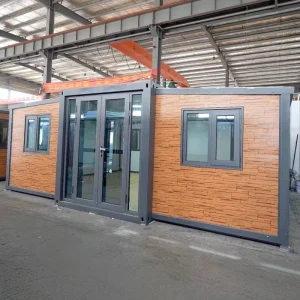 High-Quality 20FT Double Wing Expandable Container House Reddish Brown Stone Pattern Modular Glamping Cabin
-
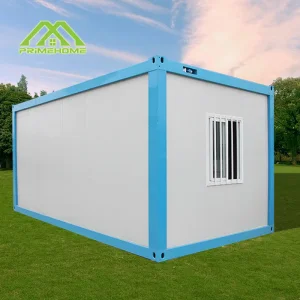 Wholesale Customized Modular Prefabricated Container Houses & Quick-assembly Container Houses
-
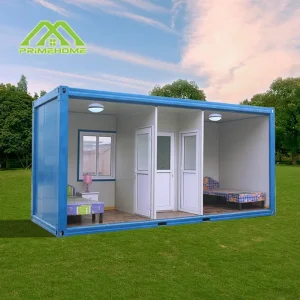 Wholesale 40 Foot Luxury Modular Container House Removable Prefabricated Steel Camping Cabin Ready to Move In
-
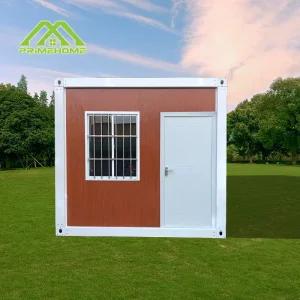 China Affordable 40 foot expandable modular container homes Fast shipping Quick delivery Easy installation
-
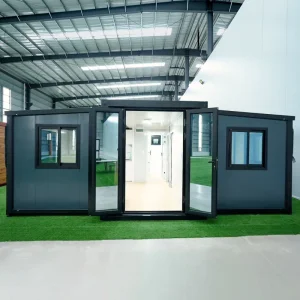 Custom 20FT Double Wing Factory Prefabrication Expandable Container House with Full Functional Layout
-
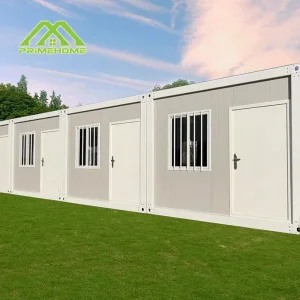 High-Quality Large-size newly designed detachable modular flat pack container houses Convenient Modern Housing
-
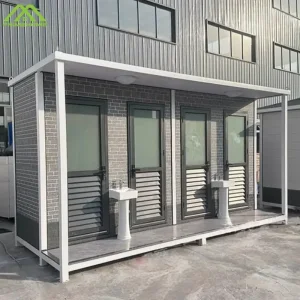 Wholesale Durable and clean Prefabricated mobile container toilets Source factory Good price
-
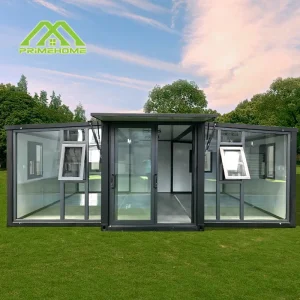 Custom Temporary mobile housing Preferred space Stackable storage Multi-purpose expansion
The Paradigm Shift: From Disposable Shelters to Grid-Independent Solar Habitats
A comprehensive examination of why global capital is migrating from site-built structures to factory-integrated, carbon-negative solar container architecture.
The global prefabricated housing sector is undergoing an unprecedented convergence with renewable energy storage technologies. Historically, container dwellings served primarily as transient site offices or low-cost temporary shelters. However, escalating civil engineering costs, chronic labor deficits across North America, Australasia, and Europe, combined with stringent ESG mandates, have elevated the Custom Solar Powered Container Home Factory to a pivotal tier in international infrastructure supply chains.
Modern solar-powered container houses are not simply sea shipping boxes retrofitted with bolt-on photovoltaic (PV) racking. Industrial-grade manufacturing treats the container frame as an optimized, thermally decoupled chassis. By embedding high-efficiency mono-crystalline silicon cells, micro-inverter matrixes, and lithium iron phosphate (LiFePO4) Battery Energy Storage Systems (BESS) directly on the factory assembly line, our Suzhou production lines achieve structural and thermodynamic integrity impossible to replicate via on-site field modifications.
As a premier source factory, PrimeHome re-engineers cold-formed structural steel frameworks to handle dead-weight solar loads and high-velocity dynamic wind shears up to Category 5 hurricanes. The integration of Building-Integrated Photovoltaics (BIPV), dual-axis deployable PV wings, and high-density polyisocyanurate (PIR) thermal cores ensures these units produce significantly more kilowatt-hours (kWh) annually than their operational baseload consumes, transforming living pods into distributed micro-power plants.
Core Engineering Metrics
- Structural Redundancy: Q235B/Q355B cold-rolled galvanized steel frame engineered for 3-story vertical stacking under full dynamic solar ballast.
- Photovoltaic Density: Up to 8.5 kWp direct generation on 40FT expandable footprints utilizing N-Type TOPCon bifacial modules (22.8% module efficiency).
- Thermal Envelope: U-values down to 0.18 W/m²K achieved via continuous polyurethane injection and broken-bridge double/triple argon glazing.
- Energy Storage Lifespan: Tier-1 Automotive-grade LiFePO4 cells rated for 6,000+ deep discharge cycles at 90% Depth of Discharge (DoD).
China Factory Cluster Advantages in Solar Modular Construction
Why the Yangtze River Delta industrial belt enables unmatched cost-to-performance ratios, rapid prototyping, and vertical component integration.
Tier-1 PV & BESS Colocation
Located in Suzhou, PrimeHome operates within a 100-kilometer radius of the world's most sophisticated solar cell foundries and lithium battery gigafactories. Direct sourcing reduces procurement lead times from months to days, cutting tier-1 component costs by 35% compared to Western assemblers.
BOM Cost OptimizationAutomated Laser & Robotic Welding
Our 28,000m² facility features continuous cold-forming roll lines and multi-axis CNC laser-cutting stations. Sub-millimeter tolerances guarantee that fold-out floor hinges, hydraulic leveling points, and photovoltaic mounting channels interlock with flawless mechanical repeatability.
Precision EngineeringMultimodal Port Logistics Integration
Proximity to Shanghai and Ningbo deep-water ports allows flat-pack, expandable, and fully assembled apple cabins to transition seamlessly from factory bays to ocean freighters. Standardized ISO lifting castings ensure zero specialty-handling surcharges across world sea routes.
Global Freight ControlGlobal Localization Support & Code Compliance Assurance
De-risking overseas project permitting through meticulous pre-engineering aligned with North American, European, Australian, and Caribbean statutory codes.
| Target Region | Structural Standards | Electrical & PV Norms | Energy & Thermal Mandates | Factory Compliance Strategy |
|---|---|---|---|---|
| United States & Canada | IBC 2024, IRC, ASCE 7-22 (Seismic D-F, Wind to 160mph) | NEC Article 705/710, UL 1741-SB, UL 9540 (BESS Safety), UL 1973 | IECC 2021 / Title 24, Continuous external insulation layer | Wet-stamped PE calculations, UL/ETL listed inverters & wiring harnesses, dual-ground grounding rods. |
| European Union & UK | Eurocode 3 (Steel EN 1993), Eurocode 8 (Earthquake), UKCA | CE Low Voltage Directive (LVD), EN 62109, VDE-AR-N 4105, G99 (UK) | Nearly Zero-Energy Buildings (NZEB), EN 13165 PIR thermal core | CE-marking throughout entire electrical schematics, RCD Type-B protection, certified fire retardancy (B-s1, d0). |
| Australia & New Zealand | AS/NZS 1170.2 (Cyclonic Wind Region C & D), AS 4100 | AS/NZS 3000 (Wiring Rules), AS/NZS 5033 (PV Arrays), AS/NZS 5139 | NCC 2022 Section J / 7-Star NatHERS equivalent R-values | Watermarked plumbing rough-ins, SAA-certified solar disconnect switches, cyclonic tie-down anchor plates. |
| Caribbean & Pacific Rim | High Velocity Hurricane Zones (HVHZ), Miami-Dade equivalent | IEC 60364 electrical microgrid specs, IP67 marine grade balance | Tropical moisture barrier, Solar Heat Gain Coefficient (SHGC) < 0.25 | Hot-dip galvanization (≥80μm), C5-M marine anti-corrosion coating, impact-resistant laminated glazing. |
Off-Grid Autonomous vs. Net-Metering Topologies
Our engineering team delivers dual-purpose microgrid electronics. Systems can operate fully islanded with intelligent dry-contact auto-starting for backup diesel/propane generators, or synchronized with municipal utility grids via smart net-metering bidirectional meters with anti-islanding safety protocols.
Fire Protection & Battery Thermal Runaway Mitigations
BESS compartments are engineered as separate structural zones isolated with 2-hour fire-rated calcium silicate board lining. Integrated aerosol fire-suppression systems (Pyrogen/Stat-X) paired with independent thermal sensors mitigate thermal runaway risks to meet stringent residential occupancy rules.
Global Enterprise Sourcing Scenarios & B2B Purchasing Matrices
Analyzing key commercial vectors driving mass procurement of turn-key solar container architecture across multiple business sectors.
Eco-Tourism, Glamping & Luxury Resorts
Operators require ultra-low environmental footprint buildings for protected natural sanctuaries where grid extension costs exceed $100,000/km. Aesthetic Apple Cabins and expandable glass-front villas provide immediate revenue activation with zero civil utility installation.
High ADR / Fast ROIMining, Oil & Remote Industrial Camps
Extraction consortia in Western Australia, northern Canada, and Chile replace expensive, diesel-dependent temporary housing with stackable, high-cycle solar flat-pack complexes. Built-in microgrids reduce basecamp diesel burn by up to 70%, drastically shrinking scope 1 emissions.
70% Fuel ReductionDisaster Response & Humanitarian Agencies
Following catastrophic hurricanes or seismic events, conventional grids fail completely. Air-transportable and rapid-fold expandable solar containers arrive ready-to-run within 15 minutes of offloading, supplying immediate triage power, satellite connectivity, and clean sanitation.
Rapid Triage DeploymentUrban ADU & Infill Housing Developers
Metropolitan markets face severe affordable housing shortfalls. Factory-assembled backyard Accessory Dwelling Units (ADUs) eliminate neighborhood site disruption. Integrated solar envelopes allow homeowners to bypass overburdened local electrical transformer limits.
Permit-Streamlined ADUsPhotovoltaic Integration, Battery Storage & Smart EMS Architecture
A rigorous breakdown of the power-electronic topology transforming standard steel envelopes into high-performance autonomous microgrids.
Advanced Balance of System (BoS) Topology
The fundamental constraint of traditional container conversions is the limited rooftop surface area relative to interior living volume. For instance, a standard 20FT unit possesses approximately 14m² of roof aperture. To resolve this thermodynamic ceiling, our factory utilizes high-yield dual-wing slide-out solar racking arrays and high-transmittance BIPV wall cladding.
Our core electrical topology utilizes a bi-directional hybrid string inverter coupled with dual MPPT (Maximum Power Point Tracking) channels. The DC bus operates at 48V nominal for compact residential units, scaling to 400V high-voltage DC for multi-container modular complexes. High-voltage architectures dramatically decrease resistive line losses (I²R) through structural interconnect harnesses, ensuring superior round-trip system efficiency exceeding 92.4%.
Central to every PrimeHome solar build is our proprietary AI-assisted IoT Energy Management System (EMS). The EMS monitors continuous solar irradiance forecasts, internal thermal dissipation, battery state-of-health (SoH), and occupancy consumption curves. During peak cooling demands, the system dynamically modulates variable-refrigerant inverter mini-split heat pumps, maximizing solar direct consumption while protecting battery reserves for nocturnal baseloads.
Factory Electrical Benchmark (40FT Expandable)
Extreme Climatic Deployment Engineering
How factory-tailored material specifications ensure failure-free longevity across diverse geographic and meteorologic realities.
Arid Middle East & Desert Zones
Equipped with dual-layer ventilated solar radiation shields, anti-dust electrostatic panel coatings, and sandstorm-proof HVAC filter baffles. Battery compartments feature active thermoelectric liquid-cooling manifolds to preserve cell life at 55°C ambient temperatures.
Thermal EnduranceSub-Zero Nordic & Alpine Belts
Features 150mm continuous high-density PIR insulation, heated battery enclosure pads to sustain charge absorption at -40°C, and steep 45° adjustable snow-shedding PV racking capable of enduring 3.5 kN/m² roof snow loadings without chassis deformation.
Arctic Thermal IsolationMarine & Tropical Island Environments
Protected with ISO 12944 certified C5-M marine-grade polyurethane epoxy barrier paint, 316 stainless steel architectural hardware, and conformal-coated electrical PCBs resistant to relentless high-salinity air, preventing premature corrosion failure.
C5-M Anti-CorrosionEmerging Technological Trajectories: 2026–2030
Anticipating next-generation manufacturing vectors in decentralized sustainable architecture.
Perovskite-Silicon Tandem BIPV Integration
PrimeHome's R&D team is actively trialing next-generation perovskite-on-silicon tandem solar cells achieving lab efficiencies above 29%. Integrated into outer steel container corrugated sheathing as durable flexible laminates, future modules will double electrical yields per square meter of exterior exposure.
Sodium-Ion (Na-Ion) Energy Storage Transition
To insulate global supply chains from lithium commodity volatility and enhance extreme low-temperature performance, factory tooling is preparing for sodium-ion energy packs. Zero raw material conflict, superior discharge retention at -20°C, and reduced flammability make Na-ion an ideal candidate for off-grid architecture.
Frequently Asked Questions: Technical & Procurement FAQ
Direct responses from our chief structural and electrical engineers regarding specifications, manufacturing, and global deployment.
How does the factory certify container structures against local municipal building codes?
Can solar-powered container houses operate entirely disconnected from municipal electrical and water utilities?
What battery chemistries and fire protection systems are installed at the factory?
How are solar panels protected from catastrophic damage during international maritime shipping?
What are the lead times for custom enterprise OEM/ODM orders?
Can the factory integrate smart building automation, keyless hotel entry, and energy IoT monitoring?
Commercial Turnkey Pods, Cabins & Multi-Story Units
Explore our high-demand deployable product line, engineered for rapid foundation anchoring and zero-emission operation.
-
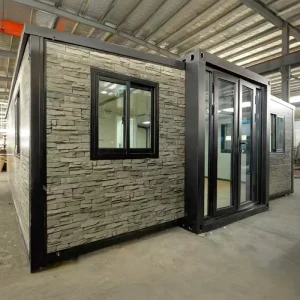 Custom 20FT Expandable Container House Prefab Villa with Unique Stone Pattern Exterior Panels for ADU
-
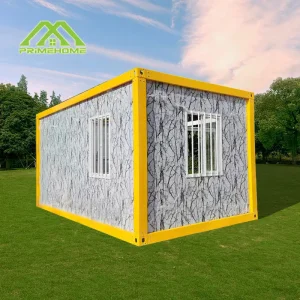 High-Quality Ready-to-ship prefabricated modular container houses with 4 or 5 bedrooms Mobile modular housing
-
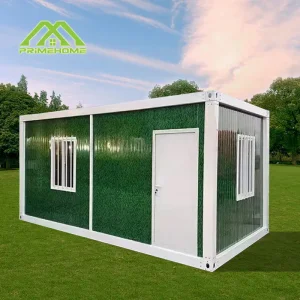 China 10ft 20ft 30ft 40ft custom house Steel metal structure Portable detachable flat pack container house
-
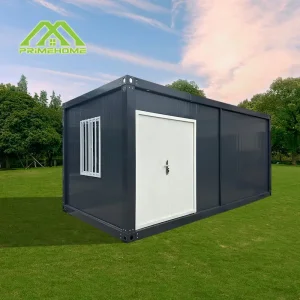 China Modern and stylish prefabricated flat pack container houses Compact glass-paneled container homes
-
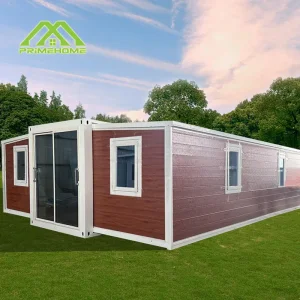 Custom Factory direct sales 20ft 30ft 40ft double-wing foldable container cabin Expandable with bathroom
-
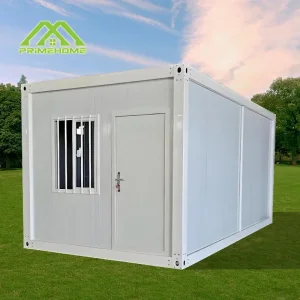 Wholesale Lightweight modular prefabricated container houses Ideal for post-disaster reconstruction Reusable
-
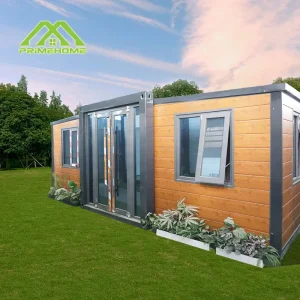 Custom Customized 20ft 40ft expandable container house High-quality modern luxury villa Collapsible container house
-
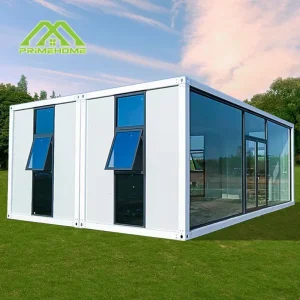 High-Quality Portable garden resort Dismountable customizable modular office cabins Ready to install and use
Initiate Your Engineering Consultation & Factory Quotation
Whether your development requires fifty off-grid solar glamping pods for a sensitive coastal reserve or one thousand modular workforce housing containers, our engineering division delivers custom CAD/BIM shop drawings, solar irradiance payback modeling, and comprehensive CIF freight pricing within 48 hours.