
Featured Modular & Container Housing Units (Catalog Part 1)
Direct-from-factory prefabricated solutions engineered for rapid deployment, commercial resorts, mining camps, and residential expansion worldwide.
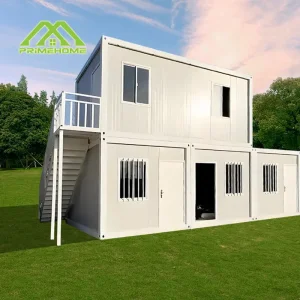
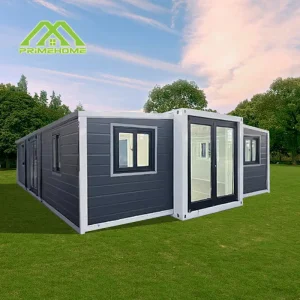
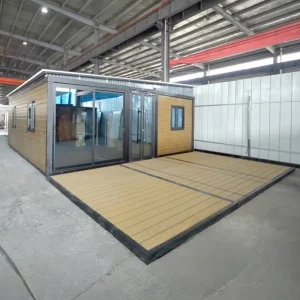
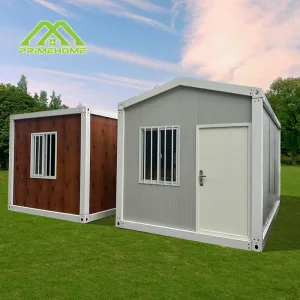
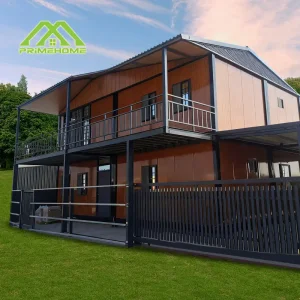
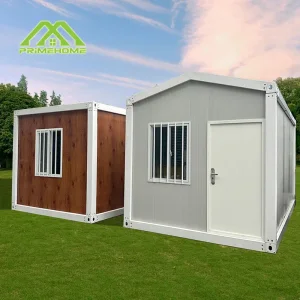
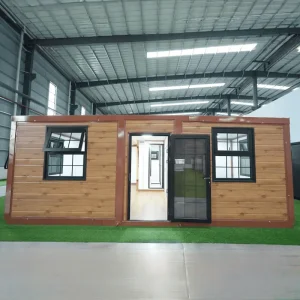
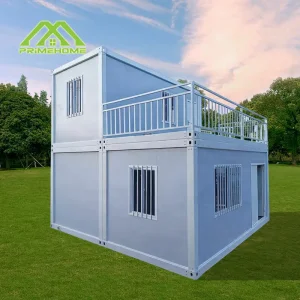
1. Global Enterprise Procurement Trends: Why China leads in Storage Container Conversion
The paradigm shift in modern commercial and residential construction has positioned turning storage containers into homes as one of the fastest-growing sectors within global modular architecture. Driven by severe skilled labor shortages, rising raw material costs, and stringent municipal ESG (Environmental, Social, and Governance) targets, international developers, B2B procurement heads, and government agencies are bypassing traditional site-built masonry in favor of factory-engineered container conversions originating from specialized industrial hubs in China.
China's manufacturing dominance in containerized building systems is backed by integrated supply chains, automated laser-cutting metal shops, robotized structural welding, and advanced spray-coating facilities concentrated in regions like Suzhou, Jiangsu. Rather than manually retrofitting retired ocean freight containers on-site—which carries latent risks of chemical contamination, structural metal fatigue, and unpredictable corrosion—leading Chinese factories utilize specialized cold-formed galvanized steel profiles and ISO-standard structural frames custom-engineered specifically for human occupancy from day one.
While authentic used ISO shipping containers (Corten steel 20ft/40ft High Cubes) provide exceptional stackability, purpose-built container homes engineered from hot-dip galvanized steel frames allow for significantly wider spatial footprints (such as Double-Wing Expandables and Detachable Flat-Packs) with pre-insulated thermal breaks built directly into the chassis.
2. Engineering & Technical Roadmap: Structural Integrity & Thermal Performance
Transforming steel containers into long-term habitable structures requires rigorous thermal modeling, structural recalculations, and advanced metallurgical coatings. Below is the technical breakdown executed by top-tier Chinese manufacturers to ensure compliance with Western building codes (IBC/IRC, EU Eurocodes, AS/NZS).
Structural Framing & Steel Grade Selection
Primary load-bearing columns and corner castings are fabricated from high-yield strength Q355B or SPA-H Corten steel. Main beams undergo hot-dip galvanization (minimum 120g/m² zinc coating) to resist atmospheric oxidation and structural deflection under heavy snow loads (up to 2.5 kN/m²).
Thermal Bridge Mitigation & Envelope Insulation
Steel has high thermal conductivity (K-value ~50 W/mK). Chinese factories eliminate cold bridges by applying continuous high-density Polyurethane (PU) closed-cell spray foam (50–100mm thickness) or non-combustible Rockwool core sandwich panels (density 100-120kg/m³, Class A fire rating), achieving thermal U-values under 0.22 W/m²K.
C4/C5 Marine Grade Anti-Corrosion Surface Treatment
For coastal or highly humid industrial deployments, container steel chassis are subjected to SA 2.5 sandblasting followed by zinc-rich epoxy primers, high-build epoxy intermediate coats, and fluorocarbon/polyurethane topcoats. This 4-stage coating system survives 1,500+ hours of salt spray testing (ASTM B117).
3. Enterprise Procurement Matrix: Comparing Container Building Methodologies
Selecting the correct container building topology directly impacts ocean freight logistics, site assembly labor hours, and overall project Total Cost of Ownership (TCO).
| Building System | Structural Core Material | Transport Efficiency | On-Site Assembly Time | Primary Commercial Use Cases |
|---|---|---|---|---|
| ISO Conversion Container | Corten-A Steel Shell (20ft/40ft HC) | Standard ISO Shipping Unit | Plug & Play (0–2 Hours) | Boutique Eco-Lodges, Pop-up Retail, High-End Glamping |
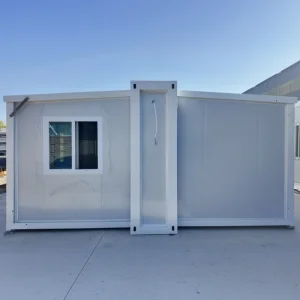
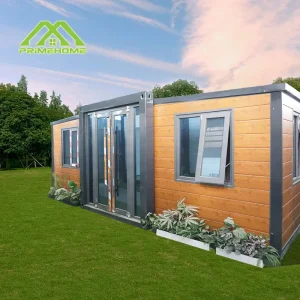
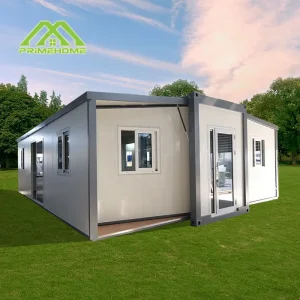
| Expandable Container House | Galvanized Steel + Fold-out Wings | 1 Unit = 3x Unfolded Footprint | 2–4 Hours (3 Workers) | Family ADUs, Emergency Housing, Remote Mining Accommodation |
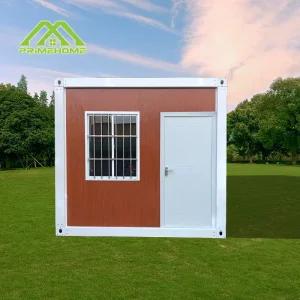
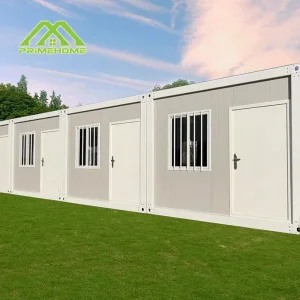
| Flat-Pack Container Unit | Knock-down Galvanized Frame + Panels | 4 Units Bundled into 1x 20ft SOC | 3–5 Hours Per Unit | Worker Camps, Temporary Offices, Disaster Relief Dorms |
| Futuristic Apple Cabin / Capsule | Aviation Aluminum + Steel Frame + Curved Glass | Delivered Ready-to-use | Plug & Play (1 Hour Crane Position) | Scenic Resort Suites, Luxury Hotel Pods, High-Margin Airbnb |
4. Global Enterprise Case Applications & Commercial Implementations
Chinese suppliers specializing in container conversions support diverse industrial, commercial, and municipal projects worldwide. The modular flexibility allows rapid customization to comply with local climate conditions and spatial needs.
Residential ADUs & Urban Infill Housing
In North America and Europe, urban zoning updates permit backyard Auxiliary Dwelling Units (ADUs). Fully finished 20ft and 40ft expandable container modules with factory-installed kitchens, full bathrooms, and dry-wet separation serve as fast turn-key rental units, achieving ROI within 24–36 months.
Mining Camps & Infrastructure Workforce Housing
Remote resource operations in Western Australia, South America, and Africa rely on multi-story stackable flat-pack and folding container dormitories. These units deliver wind resistance exceeding 120 mph (Category 4 hurricanes) and seismic tolerance up to Grade 8, keeping site crews safe in extreme environments.
Eco-Resorts & Hospitality Apple Cabins
Tourism developers utilize panoramic glass-front Apple Cabins and futuristic Space Capsules to build zero-footprint eco-resorts. Delivered as 100% completed modules, these structures require zero foundation excavation—resting gently on helical screw piles to preserve delicate environments.
5. Regulatory Compliance, Electrical Standards & Factory QA Controls
Navigating global imports requires total compliance with destination-market building and electrical codes. Reputable manufacturers in China operate comprehensive Quality Management Systems (QMS) aligned with ISO 9001:2015.
Electrical & Plumbing Certification
Concealed MEP (Mechanical, Electrical, Plumbing) conduits are installed during factory wall assembly. Electrical systems are configured specifically for the destination market: US (NEC 110V 60Hz, UL-listed wiring/outlets), EU (CE 230V 50Hz, VDE wiring), or Australia/NZ (AS/NZS 3000SAA certified).
Factory Water-Tightness & Shower Testing
Before dispatch, complete container units undergo high-pressure water spray testing (2.5 bar pressure for 30 continuous minutes) across all wall panel joints, window seals, and roof flashings to guarantee 100% weather-tight integrity during torrential rainfall.
6. Technical FAQ: Expert Answers for B2B Importers
Key architectural and engineering inquiries addressed by our senior technical staff for international developers and buyers.
What is the true structural lifespan of container homes transformed in Chinese factories?
Engineered container homes built with hot-dip galvanized steel framing and C4/C5 marine-grade coatings have a design structural lifespan of 25 to 35+ years under standard atmospheric conditions. Periodic exterior topcoat maintenance every 10–15 years can extend service life well beyond 50 years.
How do container homes prevent internal moisture condensation and rust?
Condensation occurs when warm interior air meets cold exterior steel. Chinese factories prevent this by applying continuous vapor-barrier membranes combined with closed-cell polyurethane spray foam or Rockwool insulation on the interior side of the steel corrugated shell, moving the dew point completely outside the structural cavity.
What foundation work is required before receiving expandable or flat-pack container units?
Because container homes feature rigid, self-supporting steel chassis, traditional full concrete slabs are rarely necessary. Suitable foundation solutions include concrete pier blocks at corner casting points, strip foundations, or helical ground screw piles—reducing site excavation costs by up to 70%.
Can container homes meet extreme cold climate insulation requirements (e.g., Canada, Nordics)?
Yes. For sub-zero arctic climates, factories configure dual-layer thermal insulation (100mm PU foam + 50mm Rockwool interior studs), triple-pane low-E argon filled glass windows, and electric floor heating coils—achieving U-values matching passive house standards (< 0.15 W/m²K).
How are units packaged to minimize international sea freight costs?
Flat-pack container units are bundled into SOC (Shipper Owned Container) packages where 4 flat-packed modules equal the dimensions of 1x standard 20ft ISO container. Expandable container units fold down into a standard 20ft or 40ft High Cube footprint, allowing standard ocean freight shipment without requiring open-top or flat-rack specialized vessels.
Featured Modular & Container Housing Units (Catalog Part 2)
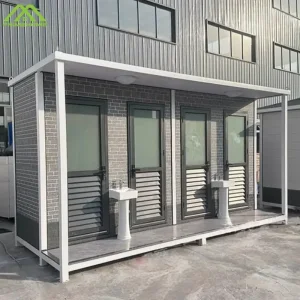
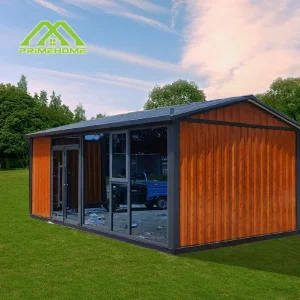
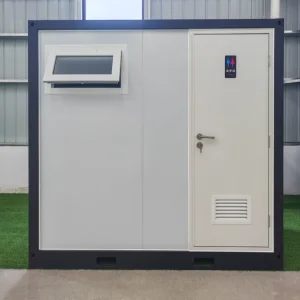
Explore extended configurations including 40ft expandables, mobile sanitary pods, and multi-scenario demountable housing modules.
7. Future Roadmap: Smart Integration & Net-Zero Circular Construction
As global decarbonization mandates tighten, Chinese container manufacturers are integrating solar photovoltaic (PV) roof arrays, battery storage banks, and greywater recycling loops directly into modular container builds. Turning storage containers into homes has evolved from a basic cost-saving alternative into a sophisticated, high-tech, net-zero architectural standard adopted by visionaries worldwide.
Partnering with an experienced Chinese factory ensures structural safety, material transparency, and predictable lead times for your next modular development.