
Featured Commercial Sanitation & Modular Living Units
Factory-direct prefabricated bathrooms, modular container toilets, and expandable sanitary structures tested for global transport and plug-and-play field utility.
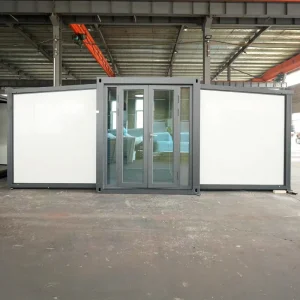
Wholesale 20FT Prefab Modular Building Expandable Container House for Custom Minimalist Single Apartment Manufacturer, Supplier
Configure Spec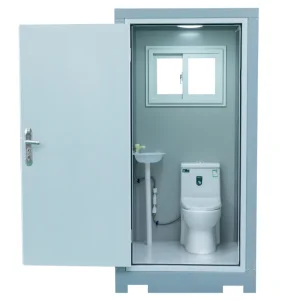
High-Quality Outdoor Portable Public Restroom Prefab Porta Potty Temporary Mobile Toilet for Camping Areas and Scenic Parks Manufacturers, Factories
Configure Spec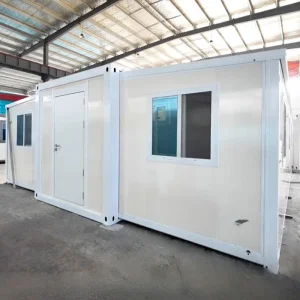
China 30FT 56sqm Living Space Prefab Expandable Container House with Private Bathroom for ADU Housing Accommodation Dormitory Manufacturer, Factory
Configure Spec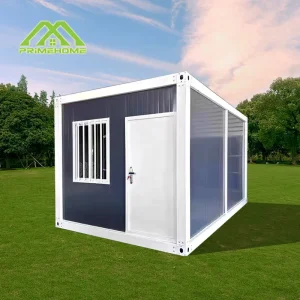
China Modern architecture Exceptionally cost-effective Prefabricated Modular Homes Ultra-fast installation Manufacturer, Factory
Configure Spec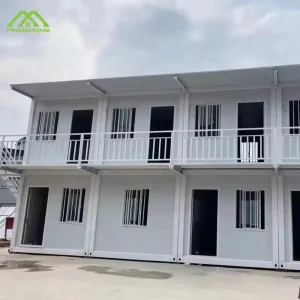
Custom Solve housing issues and relocate quickly—we recommend mobile prefabricated container house for move-in ready living Manufacturers, Factories
Configure Spec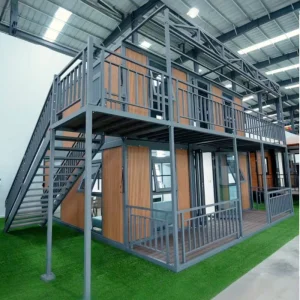
High-Quality Modern Double Story Modular Villa Prefab Expandable Container House with Complete Living and Outdoor Leisure Space Manufacturer, Factories
Configure Spec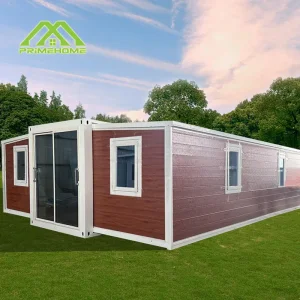
Custom Factory direct sales 20ft 30ft 40ft double-wing foldable container cabin Expandable container house with bathroom Manufacturer, Factories
Configure Spec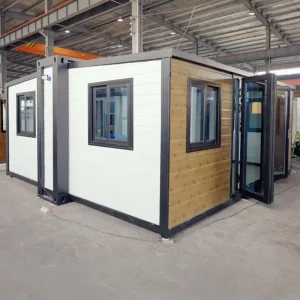
High-Quality F700 Prefab Fast Assembly Expandable Container House for Scenic Resort Accommodation Office and Residence Supplier, Factories
Configure SpecModern Sanitation Engineering: Shifting from Wet-Trade Construction to Precision Prefabrication
The global commercial and industrial sectors are undergoing a systemic transition away from traditional brick-and-mortar sanitary installations toward off-site engineered modular toilets and portable bathrooms.
Civil & Infrastructure Projects
Large-scale infrastructure works—such as transcontinental rail networks, mega-dam developments, and urban commercial expansions—demand highly durable, easily relocatable ablution blocks. PrimeHome’s galvanized steel container restrooms minimize on-site civil works, ensuring continuous compliance with occupational health and safety (OH&S) mandates without draining local utility resources.
Remote Mining & Extraction Camps
In remote mining regions across Western Australia, Northern Canada, and the African Copperbelt, harsh environments cause conventional plumbing fixtures to fail prematurely. Our portable sanitary solutions incorporate heavy-gauge cold-formed steel frames, polyurethane thermal breaks, and freeze-proof PEX-a manifolds capable of continuous operation from -40°C to +55°C ambient temperatures.
Eco-Tourism & Nature Reserves
Boutique glamping properties and protected UNESCO biospores require high-aesthetic sanitation that imposes zero permanent disturbance on virgin topsoil. By combining Apple Cabin design languages with closed-loop vacuum flush and localized aerobic digesters, operators offer five-star luxury suites without environmental impact.
Why China’s Industrial Ecosystem Powers PrimeHome’s Global Competitive Edge
Leveraging Suzhou’s world-class advanced manufacturing cluster, Suzhou PrimeHome Technology Co., Ltd. integrates the complete vertical supply chain from raw structural coils to certified architectural finishes.
Sub-Assembly Integration
Unlike Western packagers who assemble piecemeal third-party fittings, our Suzhou production lines cut, bend, and weld raw Q235B structural profiles on automated fiber-laser stations, cutting production lead times by up to 60%.
Tier-1 Component Sourcing
Every flush valve, thermostatic mixer, ceramic basin, and breaker panel is directly sourced from audited ISO-certified manufacturers holding WaterMark, WRAS, CE, and UPC certifications, eliminating intermediary markups.
Factory-Controlled QC
Every unit undergoes continuous 72-hour hydrostatic leak testing, 2.5 bar water line pressure validation, electrical insulation breakdown testing, and automated flood routing checks before container loading.
Logistics Packaging
Our patented flat-pack nesting methods allow up to 4 complete sanitary modules or 6-8 knock-down units to pack into a single 40ft High Cube sea container, saving overseas buyers up to 75% in maritime freight expenses.
Engineering for Global Microclimates & Municipal Topographies
Standardization without localization leads to product failure. We engineer each portable bathroom module specifically to withstand local geographic and climatic stresses.
Sub-Zero / Alpine Deployment
Equipped with 100mm high-density Polyisocyanurate (PIR) cores, electric self-regulating trace-heating cables across supply lines, and internal heat recovery ventilators (HRV) preventing pipe freezing down to -45°C.
- Closed-cell floor thermal barriers
- Double-glazed Argon-filled clerestory vents
- Auxiliary electric convective heating blocks
High-Traffic Event Sanitation
Designed for continuous volume throughput at multi-day festivals, municipal plazas, and sporting tournaments. Heavy-duty 304/316 marine-grade stainless-steel sanitary fixtures withstand aggressive vandalism.
- Touchless capacitive-sensor flush controls
- Industrial slope-to-trench floor gutters
- Anti-graffiti phenolic resin wall partitions
Arid & Desert Off-Grid
Engineered for GCC/Middle East and Australasian drylands with micro-mist ultra-low-consumption flush heads (1.2L per cycle) and rooftop mono-crystalline PV arrays paired with LiFePO4 energy storage.
- Integrated greywater diversion circuits
- Solar-powered forced attic ventilation
- Sealed UV-reflective PVDF exterior coatings
Coastal Marine / High Salinity
Salt fog corrodes untreated steel enclosures within 24 months. PrimeHome applies an ISO 12944 C5-M marine-grade multi-layer epoxy polyurethane painting system over hot-dip galvanized chassis members.
- Stainless 316 concealed hinges & fastenings
- Composite FRP interior wet-deck panels
- Hermetically sealed IP66 electrical junction boxes
ADA / DDA Universal Accessible
Full compliance with global accessibility regulations (US ADA Title III, Australian AS 1428.1, UK Document M). Provides step-free entry thresholds, minimum 1500mm wheelchair turning radiuses, and braille signage.
- Structural internal backing plates for 250kg grab bars
- Outward-opening panic-hardware fire doors
- Adjustable-height thermostatic basins
Technology Roadmap: The Next Generation of Autonomous Smart Sanitation
PrimeHome invests 6.5% of annual turnover into our Intelligent Environmental Pod (IEP) lab, pushing the boundaries of decentralization, water neutrality, and autonomous maintenance.
Decentralized MBR Bioreactors
Integrating micro-scale Membrane Bioreactor (MBR) wastewater recovery within the sub-floor chassis. Blackwater is separated, oxygenated, and filtered across ultra-filtration hollow-fiber membranes, recycling 85% of flush volume without sewer connections.
IoT Telemetry & Predictive Ops
Cellular-connected SCADA sensors measure water tank reserves, holding tank levels, paper dispenser consumption, and user headcounts. Facilities teams receive automated dispatch alerts before consumable shortages occur.
Automated Photocatalytic Cleansing
Internal cubicles integrate ceiling-mounted UVC sanitization sweeps linked to occupancy radar arrays. Once unoccupied, a 60-second germicidal cycle neutralizes 99.9% of surface pathogens and biological aerosol contaminants.
International Building Code Harmonization & Technical Standards
We eliminate port impoundment risks and on-site occupancy sign-off delays by pre-engineering all MEP (Mechanical, Electrical, Plumbing) rough-ins to destination-market codes before production.
| Target Market | Plumbing Code | Electrical / Fire Standards | Structural Wind/Snow Load | Factory Certification |
|---|---|---|---|---|
| North America (US & Canada) | UPC (Uniform Plumbing Code) / IPC / CSA B125 | UL 723 / NFPA 70 (NEC) 110V 60Hz GFCI Circuits | IBC Seismic Zone 4 / 150 mph Wind / 40 psf Snow | Intertek / ETL Verified |
| Australia & New Zealand | AS/NZS 3500 WaterMark Level 1 / WELS | AS/NZS 3000 (Wiring Rules) RCD Protected 240V | BCA Region D Cyclonic / Terrain Category 2 | WaterMark Certified |
| European Union & UK | EN 12056 / WRAS Approved Components | CE Low Voltage Directive 2014/35/EU / BS 7671 | Eurocode 1 / EN 1991-1-4 Wind Resistance | CE Marking / TÜV SÜD |
| Middle East (GCC / SASO) | SASO Water Conservation / IPC Alignment | IEC 60364 Tropicalized Insulated Copper Leads | 50°C Ambient Derated / High Sand Filtration | SASO SABER Registered |
Procurement & Engineering Frequently Asked Questions
Detailed technical clarity on blackwater logistics, structural design lifespans, shipping configurations, and municipal utility tie-ins.
How are blackwater and greywater managed in off-grid sites without municipal sewer access?
PrimeHome units can be configured in three primary wastewater modes: Direct-Sewer Connection with quick-release 110mm Camlock couplings; Chassis-Integrated Sump/Holding Tanks (fabricated from 4mm rotomolded HDPE or marine-grade coated steel with macerating pumps and suction discharge valves); or Decentralized Biological Digesters utilizing aerobic microbial filtration that discharges graywater suitable for subsurface irrigation.
What prevents moisture penetration and subfloor rot in constant wet-room environments?
We avoid plywood or OSB substrates in all sanitary modules. Our standard flooring features a 18mm fiber-cement composite board, covered with a hot-welded 2.0mm commercial-grade homogeneous PVC sheet or anti-slip diamond-plate aluminum floor coved 150mm up the perimeter walls. All seams are vulcanized and polyurethane elastomer coated to ensure a 100% waterproof containment vessel.
Can you manufacture units compatible with regional electrical grids (e.g., 110V 60Hz vs 230V 50Hz)?
Yes. Electrical systems are strictly designed and manufactured to the destination market's standards. For North America, we utilize UL-listed cabling, Romex runs in steel conduit, NEMA 5-15/20 receptacles, and Square D / Siemens load centers. For Europe, Australia, and New Zealand, we employ double-insulated LSZH conduits, AS/NZS 3112 or IEC 60309 external inputs, and Type A Residual Current Breakers (RCBOs).
What is the expected structural service lifespan of your containerized bathrooms?
Under regular commercial operational conditions with routine HVAC and seal inspection, our structural steel frameworks have a design life of 25+ years. Frames are treated with hot-dip galvanizing (minimum 275g/m² zinc layer) followed by an automotive-grade baked epoxy primer and polyurethane fluorocarbon topcoat that resists extreme UV radiation, sea salt spray, and abrasive winds.
How are units packaged to prevent internal fixture damage during sea freight?
Fully built-out units (e.g., Apple Cabins and modular toilet pods) feature internal bracing where ceramic sanitaryware is secured with high-density EVA shock absorbing cradles. Piping is purged of water, fixtures are secured with seismic tensioning straps, and mirrors/glass are protected by shatterproof peel-off films. Units travel sealed within CSC-certified container dimensions or on flat-rack containers with custom heavy-duty PE export tarpaulins.
What are the foundation requirements prior to offloading and commissioning on site?
Due to our rigid self-supporting structural subframe, extensive strip footings or full concrete slab pours are often unnecessary. For temporary setups, compacted gravel pads with concrete corner piers or heavy timber railway sleepers at container twist-lock locations are sufficient. For permanent municipal setups, ground screws or reinforced concrete pad footings engineered to local frost line depths are recommended.
Expandable Cabins, Detachable Toilets & Modular Enclosures
High-specification prefabricated architectures engineered for rapid site deployment, low maintenance footprints, and turnkey move-in readiness.
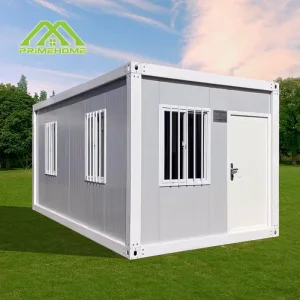
Custom Luxury rapid portable expandable prefabricated container house suitable for apartments, hotels, outdoor villas or courtyards Manufacturer, Supplier
Configure Spec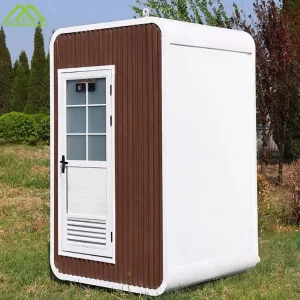
Wholesale Factory direct sales Single or double modular container toilet Prefabricated public restrooms Manufacturer, Manufacturers
Configure Spec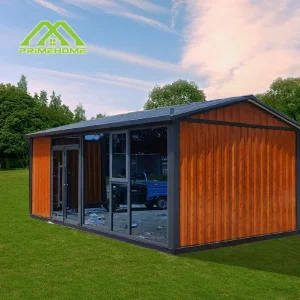
Custom Multifunctional prefabricated modular apartment complex Demountable customizable container-type housing Suppliers, Factories
Configure Spec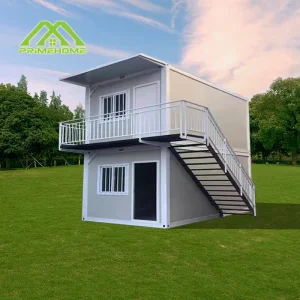
High-Quality Customized large-scale houses Prefabricated panel houses Prefabricated mobile homes and prefabricated outdoor container houses Suppliers, Factory
Configure Spec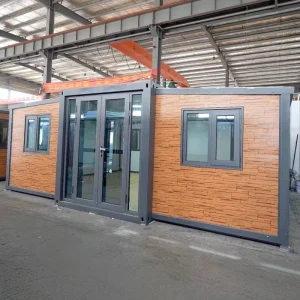
High-Quality 20FT Double Wing Expandable Container House Reddish Brown Stone Pattern Modular Glamping Cabin Manufacturer, Factory
Configure Spec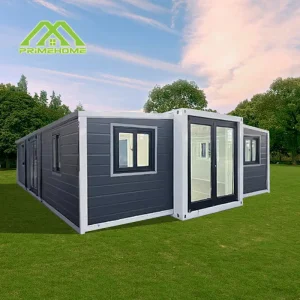
Custom Luxury prefabricated double-wing expandable container house Readymade container house Fold-out container homes Manufacturer, Suppliers
Configure Spec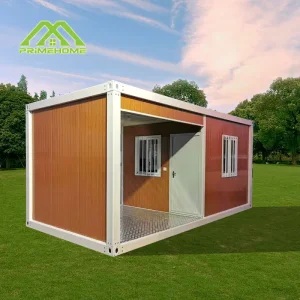
China Hot-selling 20ft 40ft prefabricated portable and demountable container houses Available in stock High quality guaranteed Manufacturer, Suppliers
Configure Spec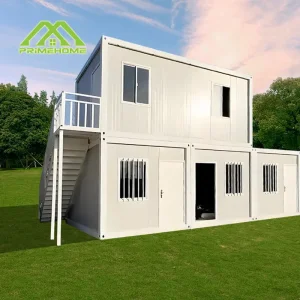
Custom 20-year warranty on mobile prefabricated houses for quick deployment and move-in, complete with kitchen and bathroom Suppliers, Factory
Configure SpecRequest an Engineering Procurement Dossier & CAD Submittal
Collaborate directly with our Suzhou technical office. Receive complete structural static calculations, BIM/Revit models, hydraulic schematics, and factory FOB/CIF project costing within 24 business hours.
Contact Our Engineering Office