
What Are the Top Container Toilet Types in 2026?

Time:2026-11-10 Author:Sophia
0%

A Container Toilet can be a compact unit beside a construction site, a shower-and-toilet module at a remote camp, or a higher-capacity facility for a busy event. In 2026, the right choice still depends on practical details: how many people will use it, how often it can be serviced, and whether the site has water, power, and vehicle access. A unit may look suitable in a brochure, yet feel cramped once workers bring muddy boots and equipment inside. Small details matter.

This guide compares the main container toilet types, including basic single-cubicle units, multi-stall blocks, accessible models, and self-contained options. It considers layout, ventilation, cleaning access, durability, and the trade-offs between fixed connections and onboard systems. The goal is to help buyers ask sharper questions before choosing a unit—not to claim one design fits every site. One important sourcing note: no articles or verifiable expert quotation were provided, so I won’t invent an expert’s name or words. A sourced specialist quote should be added once a reliable interview or publication is available. That restraint matters. Toilet specifications vary by manufacturer, and a neat floor plan cannot replace checking real service requirements, door clearance, and interior space.
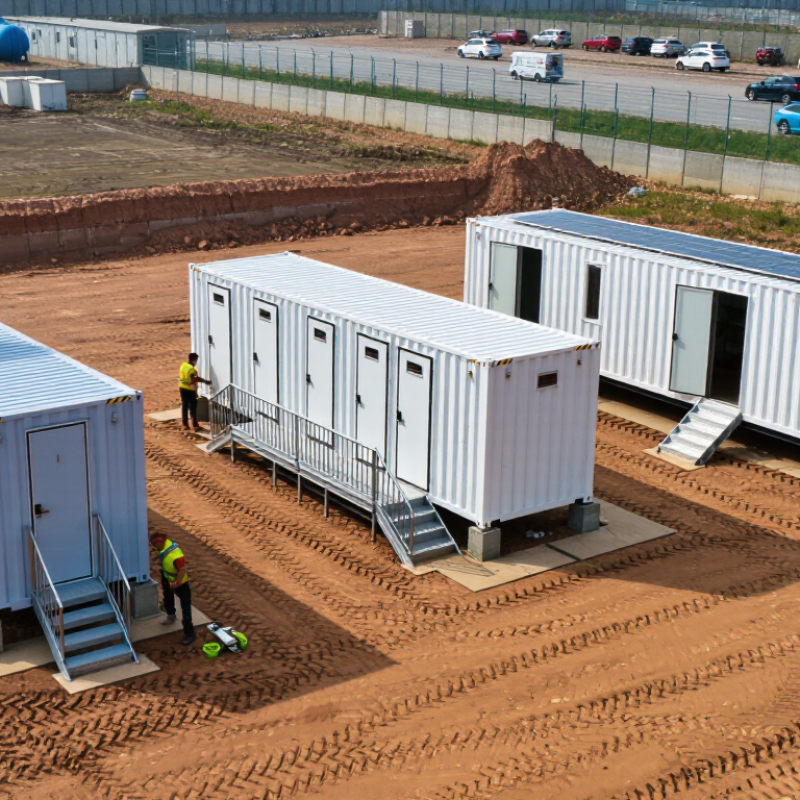
What Are the Top Container Toilet Types in 2026?

What Is a Container Toilet and How Does It Work?

A container toilet is a restroom installed inside a transportable, enclosed structure. It can serve construction sites, outdoor events, remote workplaces, or locations where permanent plumbing is unavailable. The enclosure protects the fixtures and creates a private space, while the toilet system manages water and waste inside or beyond the unit. Compact, but not simple.

In a self-contained flush model, a fresh-water tank supplies the bowl, often through an electric pump. After flushing, wastewater flows into a sealed holding tank beneath the floor or nearby. A vent helps control odors, and a service hatch allows technicians to empty and inspect the tank. Other models connect to a sewer or treatment system, so waste leaves through fixed plumbing rather than being stored on-site. Dry or composting toilets may suit locations with limited water, though they need different handling and maintenance.

The best fit depends on access to water, drainage, power, and regular servicing. A busy event can fill a holding tank faster than expected. That detail is easy to overlook. Check tank capacity, handwashing facilities, ventilation, and accessible service points before choosing a unit. Even a well-built container toilet can become unpleasant if waste removal or cleaning falls behind.

What Are the Main Container Toilet Types Available in 2026?

Container toilets in 2026 generally use four systems: sewer-connected flushing, holding-tank flushing, vacuum flushing, or dry treatment.

Sewer-connected units suit sites with reliable water and drainage. Holding-tank models collect waste in a sealed tank, making them practical for temporary sites without sewer access. The tank needs scheduled emptying. That detail is easy to overlook.

Vacuum-flush toilets use less water per flush than many conventional systems, but need power and specialist maintenance. Dry or composting toilets avoid routine flushing and can work where water is scarce. They need careful ventilation, servicing, and clear user instructions. Incinerating models are another waterless option, though they require electricity and suitable exhaust arrangements. The best fit depends on site conditions, not just the toilet itself.

Water efficiency matters. The US Environmental Protection Agency says WaterSense-labeled toilets use 1.28 gallons per flush or less, at least 20 percent below the federal 1.6-gallon standard. That benchmark applies to qualifying toilets, not every container unit.

Meanwhile, the 2023 WHO/UNICEF Joint Monitoring Programme report estimated that 3.5 billion people lacked safely managed sanitation in 2022. It underscores the need for dependable sanitation, but does not rank container systems. A site assessment should check water supply, power, servicing access, and expected daily use; estimates can still miss peak-hour demand.

How Do Container Toilet Types Differ in Features and Capacity?

What Are the Top Container Toilet Types in 2026?

Container toilet types differ in layout, privacy, and how many people they can serve between service visits. A single-stall unit is compact and straightforward, making it useful at small work sites or temporary events. Multi-stall units handle heavier queues and can separate facilities by user needs. Accessible layouts provide more turning space and wider entryways, but that room can reduce the number of stalls inside the same container.

Combined toilet-and-washroom units add sinks, and some include showers. They offer more convenience, though extra fixtures take up space and increase water demand. Capacity is not just a stall count. Holding-tank size, expected daily use, and how often the unit can be serviced all matter. A container may look spacious on a plan, yet feel cramped once queues form. That trade-off deserves a site check.

Tips: Estimate peak use, not average use. Check tank capacity and servicing access before choosing. Keep clear space around entrances. If demand changes during the day, a larger unit may help—but it may also take longer to set up.

What Are the Top Container Toilet Types in 2026? - How Do Container Toilet Types Differ in Features and Capacity?

The figures below are typical planning ranges, not fixed specifications. Actual layouts and capacity vary by container dimensions, plumbing, local accessibility requirements, and the number of users.

Container Toilet Type Typical Container Size Typical Fixture Capacity Water Use and Utilities Key Features Common Applications
Single-Stall Standard Unit Compact module, often built within a 10- or 20-foot container 1 toilet; handwashing basin typically included Usually connected to a water supply, sewer or holding tank, and electrical service Simple, private layout; relatively quick to install; limited simultaneous use Small work sites, temporary facilities, parks, and remote locations
Multi-Stall Standard Unit Commonly a 20- or 40-foot container About 2–4 toilets in a 20-foot layout or 4–8 in a larger layout; urinals may be added Typically requires reliable water, drainage or waste storage, and electrical connections Multiple users can use the facility at once; may include separate sections and several sinks Construction projects, public events, transport hubs, and larger temporary sites
Accessible Toilet Unit Often a dedicated accessible module or a section of a larger container Usually 1 accessible toilet room, with turning and transfer space planned around the layout Generally uses standard water and drainage connections; lighting and ventilation are commonly provided Wider access route, accessible fixtures and grab bars; final design should meet applicable local codes Public events, workplaces, parks, and sites serving users with mobility needs
Toilet-and-Shower Combination Typically a 20- or 40-foot container, depending on the number of rooms Commonly 1–2 toilets and 1–4 showers, with a basin or shared wash area Needs water heating as well as water supply, drainage, and electrical service Combines washing and toilet facilities; requires more hot-water capacity and maintenance than a toilet-only unit Worker accommodation, camps, sports facilities, and emergency response sites
Low-Water or Vacuum-Flush Unit Layouts vary; systems can be installed in compact or multi-stall containers Fixture count depends on the layout; commonly configured for 1–6 toilets Uses low-flush or vacuum technology; still needs a suitable waste-management system and may require electrical power Can reduce flush-water demand compared with conventional flushing systems; performance depends on equipment and servicing Water-constrained sites, remote installations, and locations where reduced water use is a priority
Self-Contained Holding-Tank Unit Often a compact module or a container with an integrated waste tank Typically 1–4 toilets, depending on tank size and servicing frequency Stores wastewater on site; tank capacity and pump-out schedule determine practical operating capacity Can operate where sewer access is unavailable; requires planned waste removal and monitoring Temporary worksites, outdoor events, and locations without a sewer connection

Where Is Each Type of Container Toilet Best Used?

Container toilets suit different sites, and the best choice depends on access, water, and expected use. A basic chemical toilet container works well at temporary construction sites, roadside projects, and outdoor events with limited utilities. It can be positioned quickly, but needs regular servicing. For venues with water and drainage, a flushable container toilet usually feels more comfortable during long shifts or busy public events. Check utility connections before delivery; they are easy to overlook.

Accessible units are useful at festivals, community gatherings, and work areas serving people with varied mobility needs. Allow clear approach space and a level route, not just a wider doorway. A toilet-and-shower container is better suited to remote camps, seasonal sites, or longer projects where workers need washing facilities nearby. It takes more space and planning. That trade-off is not always worth it for a short event.

Tips: Estimate peak use, not just average attendance. Ask the supplier about cleaning frequency, ventilation, handwashing, and winterization. Walk the proposed location if possible. A layout that looks fine on a site plan can feel cramped once queues form.

What Factors Should Guide the Choice of a Container Toilet?

What Are the Top Container Toilet Types in 2026?

What Factors Should Guide the Choice of a Container Toilet?

Container toilets commonly use flush, vacuum, composting, or dry-separation systems. Choose by site conditions, not by the system’s label alone. A flush unit may suit a reliable water supply, while a dry system can reduce water demand. Vacuum systems can use less flush water, but need compatible equipment and trained maintenance. Composting units require careful ventilation and waste handling. No type is maintenance-free.

Start with expected users, daily peak traffic, and how long the unit will stay onsite. Then check available water, power, drainage, access for service vehicles, and local climate. A shaded, ventilated interior can feel far more usable on a hot afternoon. Door width, handwashing access, lighting, and space for mobility aids matter too. The WHO/UNICEF Joint Monitoring Programme reported that 3.5 billion people lacked safely managed sanitation in 2022. That figure underscores a practical point: safe collection and treatment matter as much as the toilet itself. A compact unit can still feel cramped; site plans do not always reveal that.

Tips: Estimate peak use, not average use. Ask suppliers for cleaning intervals, storage capacity, and service access. Confirm those details against your actual site layout before ordering.

FAQS

Where does a basic chemical container toilet work best?

It suits temporary construction sites, roadside projects, and outdoor events with limited utilities. It can be positioned quickly. Regular servicing is still needed.

When is a flushable container toilet a practical choice?

Choose one when reliable water and drainage are available. It can feel more comfortable during long shifts or busy public events. Check connections before delivery.

What should I check before choosing a toilet system?

Consider peak users, site duration, water, power, drainage, climate, and service access. Labels alone do not tell the whole story.

Are dry systems useful where water is limited?

They can reduce water demand. But waste handling and maintenance still need planning. Dry does not mean effortless.

What extra planning do vacuum or composting systems need?

Vacuum units need compatible equipment and trained maintenance. Composting units need careful ventilation and waste handling. Ask about service requirements.

What makes a container toilet accessible?

Allow a level route and clear approach space, not just a wider doorway. Check room for mobility aids and nearby handwashing.

When is a toilet-and-shower container worthwhile?

It can suit remote camps, seasonal sites, and longer projects. It needs more space and planning. For a short event, that may be too much.

How can I tell if the proposed site will work?

Walk the location if possible. Check service-vehicle access, lighting, ventilation, and space for queues. A neat site plan can still feel cramped.

Conclusion

A Container Toilet is a self-contained sanitation unit built into or designed for use with a transportable container. Depending on its system, waste may be stored in a sealed holding tank, treated through a composting process, or moved with water or vacuum-assisted flushing. In 2026, common options include basic holding-tank toilets, flush toilets, vacuum toilets, and composting models. They differ in water and power needs, maintenance routines, storage capacity, and the number of people they can serve before servicing is required.

The best choice depends on where the unit will be used and how often it will be occupied. Basic holding-tank models can suit temporary sites with straightforward servicing, while flush or vacuum systems may be more appropriate where comfort and frequent use matter. Composting options can help reduce water demand when conditions and upkeep are suitable. Before choosing, consider expected users, installation space, access to water and power, waste-handling arrangements, cleaning requirements, climate, and budget.

Sophia

Sophia

Sophia is a dedicated marketing professional with an exceptional depth of knowledge about her company's products and services. With a keen understanding of market trends and customer needs, she crafts insightful blog posts that not only inform but also engage readers, enriching the company’s online......